
For Today & Tomorrow
The Complete System
For Performance & Longevity


 Shop
 Learn


Editorial Team
Want To Jump Ahead?
Lock in Limited Time OfferOne of the main benefits of Zone 2 training is that it allows you to work on your endurance at a controlled intensity, using activities such as brisk walking, cycling, or swimming.
The trick is finding an effort that challenges you without leaving you gasping for breath. A stroll around the shops might be too easy for a structured cardio session, while an uphill walk could be exactly right. Your fitness level matters just as much as the activity itself.
Zone 2 has attracted plenty of attention in fitness and longevity circles, but it isn't a magic training zone. Here's what the evidence tells us, how to recognise the right intensity, and how to build a routine without becoming a runner.
Zone 2 is a relatively low-intensity form of aerobic exercise. In commonly used five-zone training models, it sits below the first lactate or ventilatory threshold: the point at which breathing and other physiological responses begin to change more noticeably as effort increases.
In practical terms, you should be breathing more deeply than you would at rest, but still feel in control. You can maintain a steady pace without needing frequent breaks.
There's one important complication: not every watch, coach, or training programme defines Zone 2 in exactly the same way. A heart-rate zone displayed on a fitness tracker is an estimate, whereas an exercise test can identify individual physiological thresholds more directly.
A 2025 expert commentary by Sitko and colleagues, published in the International Journal of Sports Physiology and Performance, addressed this lack of consistency. The panel of 14 sports scientists and coaches proposed defining Zone 2 relative to the first lactate or ventilatory threshold.
For everyday exercisers, the lesson is simple: don't get caught up in the number displayed on your watch. Learn what a steady, controlled effort feels like, then use heart rate as a guide if it helps.
The strongest reason to consider Zone 2 is that low-intensity endurance exercise can improve aerobic fitness when performed consistently.
Potential benefits include:
A 2026 systematic review and meta-analysis by Nuuttila and colleagues, published in Scandinavian Journal of Medicine & Science in Sports, examined 50 studies involving 824 participants in the low-intensity training intervention groups. It found improvements in measures of aerobic fitness compared with control groups. The review also reported smaller effects on several cardiometabolic measures, although results varied between studies.
These findings support low-intensity endurance training generally. They don't prove that every Zone 2 programme produces the same results, or that Zone 2 is better than other forms of exercise for everyone.
In a 2025 review published in Sports Medicine, Storoschuk and colleagues challenged the popular claim that Zone 2 is uniquely optimal for improving mitochondrial capacity and cardiovascular health in the general population. They highlighted evidence supporting higher-intensity exercise for some outcomes.
Zone 2 can be useful without being the only intensity worth training at. The appropriate mix depends on your goals, current fitness, available time, and how well you tolerate different types of exercise.
You can get started without a specialist test or an expensive heart-rate monitor. Use these three checks together.
The talk test: Try saying a full sentence while exercising. At an appropriate steady effort, conversation should remain possible without gasping for air. If you can chat effortlessly and your breathing barely changes, you may need a little more challenge. If you can manage only a few words before stopping for breath, ease back.
Your perceived effort: Aim for around 3–4 out of 10 as a practical starting point, where 0 is resting and 10 is maximal effort. Your breathing should be noticeably elevated, but you shouldn't feel as though you're fighting to keep going. This is a guide rather than a precise measurement.
Your heart rate: A fitness watch can help you keep track of your effort, particularly once you understand your own patterns. However, estimated heart-rate zones aren't exact. Heat, fatigue, hydration, medication and individual differences can all affect your heart rate.
Don't worry if your watch and your breathing don't appear to agree. Slow down, check how you feel, and avoid pushing yourself just to hit a target number.
The talk test is useful for estimating exercise intensity, but it cannot confirm your precise physiological Zone 2 threshold. For that, a properly conducted exercise assessment is more informative.
Walking is a good option, but whether it reaches Zone 2 depends on how hard you're working relative to your own fitness.
Imagine two people walking along the same flat path. One is returning to exercise after years at a desk. The other cycles several times a week. A pace that leaves the first person breathing harder may feel like a warm-up to the second.
Neither person needs to start running. They may simply need different levels of challenge.
If your usual walk feels too easy, try this progression:
Cycling, swimming, and the elliptical trainer are other options. Choose an activity that feels comfortable, fits your circumstances and allows you to maintain a reasonably steady effort.
And don't write off an easy walk just because it doesn't reach Zone 2. Walking to the shops, taking the stairs and breaking up long periods of sitting all contribute to an active day. Not every movement session needs to be a structured workout.
These approaches serve different purposes, and you don't have to choose just one.
Everyday walking. A relaxed stroll or walking for transport helps you move more throughout the day and spend less time sitting. It may not raise your heart rate enough for a structured cardio session, but it still contributes to an active lifestyle.
Zone 2 training. This involves maintaining a steady, controlled effort for an extended period. Brisk walking uphill, cycling and swimming can all work, depending on your fitness level. It's a practical option if you want to build aerobic fitness without pushing yourself through exhausting workouts.
High-intensity interval training (HIIT). HIIT alternates short, harder bursts of exercise with periods of recovery. It can improve cardiorespiratory fitness in less time, but the effort is more demanding and may not suit everyone, particularly those who are new to exercise.
Research doesn't establish that Zone 2 is universally superior to interval training. A 2021 systematic review and meta-analysis by Poon and colleagues examined 14 studies involving 429 middle-aged and older adults. Both interval training and moderate-intensity continuous training improved VO₂max, while the average improvement was greater with interval training in the included studies.
That doesn't mean you need to start doing sprints. The review compared particular training programmes in particular populations; it wasn't a trial of every possible Zone 2 routine against every interval workout.
If hard intervals feel miserable, steady cardio remains a reasonable choice. If you enjoy variety and your fitness allows it, you can combine both. The best approach is one that supports your goals without making exercise so unpleasant that you stop doing it.
The best cardio plan isn't the one that looks toughest on paper. It's the one that challenges you appropriately and fits into a life you actually live.
Start with a duration you can manage comfortably. If you're new to structured cardio, two or three sessions of 15–20 minutes may be a practical starting point. Build towards longer sessions as your fitness improves, rather than treating a particular number of minutes as a requirement.
For example, your first week might look like this:
Keep the effort controlled, and increase duration or difficulty gradually. If you're already active, you may be ready for longer sessions. If you're managing a chronic health condition, recovering from illness or experiencing symptoms with exercise, seek appropriate professional advice before increasing your training.
For broader health planning, the Australian Government's 2026 movement guidelines recommend moderate-to-vigorous physical activity for 30 minutes or more on most days for adults aged 18–64. They also recommend muscle-strengthening activities on at least two days a week, functional activities targeting mobility, balance, and coordination on three or more days, and several hours of light activity throughout the day.
These recommendations provide a useful framework, but public-health intensity categories aren't identical to Zone 2 training zones. You don't need to complete a particular amount of Zone 2 to make your activity worthwhile.
Your training provides the main exercise stimulus. Food, hydration, and recovery help you support that activity and maintain a routine you can repeat.
Protein is particularly relevant if you're combining cardio with resistance training, because it contributes to the growth and maintenance of muscle. You can get protein from ordinary foods, and supplements aren't compulsory.
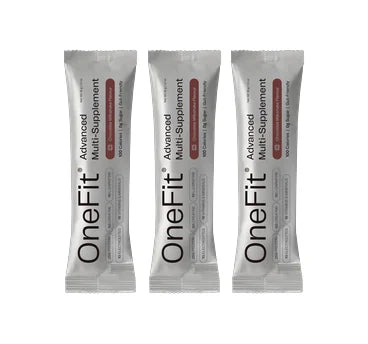
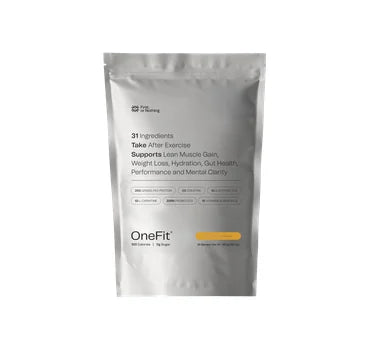
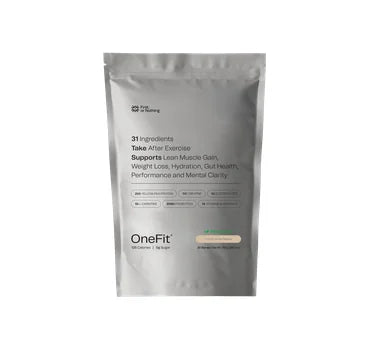
For people who prefer convenience, OneFit® combines protein and creatine with electrolytes, probiotics, and other vitamins and minerals in a single serving. It can complement balanced meals and support an active lifestyle, particularly when strength training is part of the week. It can fit into a broader routine built around nutritious food, regular movement, and adequate recovery.
The more important starting point is to choose an activity you enjoy enough to repeat. If that means cycling while listening to a podcast, walking uphill near home, or swimming a few laps, build from there.

For Performance
$3.30/day
$297/90 DAYS
You can improve aerobic fitness without running. Walking on an incline, cycling, and swimming can all provide a useful steady workout when the intensity matches your fitness level.
Zone 2 is best understood as one way to organise aerobic training, not a shortcut or a mandatory part of a healthy routine. You don't need perfect heart-rate data, and you don't have to turn every walk into a workout.
Start with a manageable session, pay attention to your breathing and build gradually. Pair aerobic activity with strength work and everyday movement to create a more balanced approach to fitness.
Get our weekly deep-dive into performance science, research summaries, and elite training protocols.
Join 45,000+ high-performers. Unsubscribe anytime.
Every batch of First or Nothing products is independently tested for heavy metals, purity, and dosage accuracy to ensure safety and quality.

First or Nothing is independently tested for heavy metals, purity, and dosage accuracy.
 OneFit®
OneFit®
OneFit®
OneFit®
OneFit®
First or Nothing is independently tested for heavy metals, purity, and dosage accuracy.
OneLife™
OneLife™
OneLife™
© 2026 FON Health AU Pty Ltd


Please select your shipping country.
Buy from the country of your choice. Remember that we can only ship your order to addresses location in the chosen country.

 Ships in 24h
"EXCELLENT"
 rated 4.8/5 on


