
For Today & Tomorrow
The Complete System
For Performance & Longevity


 Shop
 Learn


Editorial Team
Want To Jump Ahead?
Lock in Limited Time OfferBut does sitting in a hot room actually slow biological ageing?
A study published on 15 October 2026 in Scientific Reports adds an important qualification. Researchers examining 84 adults aged 40 to 64 found no significant differences in telomere biomarkers between regular sauna users and people with lower sauna exposure. The findings challenge the assumption that sauna use necessarily translates into slower cellular ageing.
This means the evidence for cardiovascular health, biological ageing and longevity needs to be considered separately. Here's what the research tells us, where the uncertainty remains, and what it means if you're trying to stay healthier for longer.
Biological ageing describes changes in the body's cells, tissues and physiological systems over time. Chronological age is the number of years you've lived; biological-age measurements attempt to capture aspects of how your body is ageing.
There is no single measurement that provides a complete picture of biological age. Researchers investigate different indicators, including DNA methylation patterns, physiological measures, and telomere length.
Telomeres are protective structures at the ends of chromosomes. They help protect genetic material during cell division and generally become shorter as cells divide. Their length is influenced by multiple factors, however, and varies between individuals and cell types.
Shorter telomeres have been associated with ageing and certain health risks, but they are not a definitive measure of overall health or lifespan. A single telomere result cannot tell you exactly how quickly your body is ageing.
This matters when evaluating longevity claims. Even if an intervention affects a particular biological marker, that does not automatically mean it prevents disease, extends lifespan, or makes someone biologically younger.
To establish that sauna bathing slows ageing, researchers would need evidence that goes beyond a plausible mechanism or a single biomarker. They would need to demonstrate meaningful effects on relevant ageing outcomes.
The study, titled Telomere length in midlife is associated with age, central adiposity, and perceived stress rather than habitual sauna exposure, examined 84 adults aged 40 to 64. The participants included 42 regular sauna users and 42 people with lower sauna exposure.
Researchers used high-throughput quantitative fluorescence in situ hybridisation, known as HT Q-FISH, to assess telomere length. They examined several measurements, including median, average, and short telomeres.
The main finding was straightforward: the researchers found no significant differences in the measured telomere biomarkers between the two groups. Sauna exposure was also not independently associated with the telomere outcomes assessed.
Instead, chronological age was consistently associated with shorter telomeres. A higher waist-to-hip ratio and greater perceived stress were also associated with shorter telomeres, while perceived stress was linked to greater telomere-derived biological ageing.
The findings offer a useful reality check for the longevity industry, where practices can sometimes be promoted as though their cellular benefits are already established.
However, the study has important limitations. It was cross-sectional, meaning the researchers assessed participants at one point rather than tracking changes over years. It included only 84 people and cannot establish whether sauna use causes changes in ageing.
The results also do not rule out every possible benefit of sauna bathing. A larger study, a different population or a longer follow-up period could produce different findings.
The appropriate interpretation is that this study found no independent association between habitual sauna use and the specific telomere biomarkers measured in this sample. It did not establish that saunas are ineffective for every health outcome.
Some of the enthusiasm surrounding sauna bathing comes from research on cardiovascular health and mortality.
A frequently cited study published in JAMA Internal Medicine in 2015 followed 2,315 middle-aged men in eastern Finland. Over a median follow-up of approximately 20.7 years, more frequent sauna bathing was associated with lower risks of sudden cardiac death, fatal cardiovascular disease, and all-cause mortality.
The findings attracted attention because the researchers followed participants for many years. However, the study was observational. It identified associations rather than proving that sauna use itself caused the lower mortality risks.
People who use saunas frequently may differ from less frequent users in other ways, including their health behaviours, socioeconomic circumstances and general lifestyle. Statistical adjustments can account for measured factors, but they cannot eliminate every possible source of confounding.
Other research has investigated sauna bathing in specific clinical populations. A 2018 systematic review and meta-analysis by Källström and colleagues, published in Clinical Cardiology, examined sauna interventions in people with heart failure. Seven studies involving 491 participants contributed to the meta-analysis, which found improvements in some short-term measures of cardiac function.
Those findings are relevant to cardiovascular research, but they do not demonstrate that sauna use slows biological ageing in otherwise healthy adults.
A 2025 systematic review and meta-analysis of 20 randomised controlled trials also examined passive heating interventions, including sauna bathing and hot-water immersion. The pooled analysis found no significant effects for most of the measured cardiometabolic and vascular outcomes.
Together, these studies show why the evidence needs to be evaluated outcome by outcome. An association with lower mortality does not prove a direct anti-ageing effect, and a lack of change in one biomarker does not settle every question about sauna use.
A healthier life is the goal. A younger-looking number on a biological-age test is not proof that you're getting there.
A health practice can produce measurable physiological responses without being proven to slow the ageing process.
During sauna bathing, heat raises skin temperature and increases blood flow to the skin. Heart rate can rise, sweating increases, and the cardiovascular system responds to the demand of dissipating heat. These responses provide plausible reasons to investigate sauna use as a form of passive heat exposure. Researchers have examined its relationship with blood pressure, vascular function and cardiovascular outcomes.
But a plausible mechanism is not the same as proof of a long-term health benefit. A temporary change in circulation does not establish that a person will develop less disease, age more slowly, or live longer.
The same principle applies to many wellness trends. A supplement might influence a biological pathway in laboratory experiments without demonstrating a meaningful improvement in human health. A biomarker might change without producing a measurable difference in how someone feels or functions.
The question is not simply whether a biological response occurs. It is whether that response leads to a meaningful, reproducible benefit in people. That distinction is especially important when evaluating longevity products and routines. The more ambitious the claim, the more carefully the evidence needs to be examined.
If your goal is to stay healthier for longer, focus on sustainable habits rather than searching for one intervention that promises to slow the clock.
Regular physical activity, balanced nutrition, adequate sleep, and managing ongoing stress are all important foundations for healthy ageing. Sauna bathing can also be an enjoyable addition to your routine if you tolerate heat well, but it should complement these habits rather than replace them.
Nutrition is another practical area to prioritise. Getting enough protein and eating a balanced diet can help you maintain muscle, stay active and support your overall health as you age.
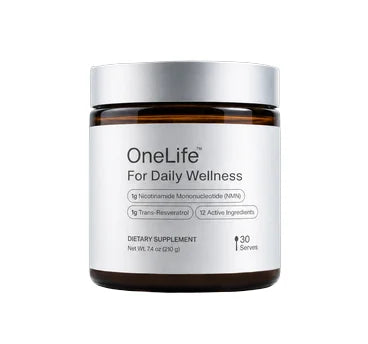
For those looking for a convenient addition to their daily wellness routine, OneLife™ is formulated to support cellular health, energy, brain function, skin and joint health as you age. It’s designed to complement the everyday habits that support healthy ageing, including balanced nutrition, regular movement and adequate sleep.
The goal is to build a routine you can maintain, rather than trying to fit every possible longevity intervention into your day. A supplement can be part of that routine, but it should complement a balanced diet and healthy lifestyle, not replace them.

For Longevity & Cellular Health
$3.90/day
$351/90 DAYS
Sauna bathing may be a worthwhile part of a healthy lifestyle, but it should not be treated as a proven anti-ageing strategy. For those interested in longevity, the bigger priority is building sustainable habits that support long-term health. Sauna can be one part of that routine, alongside regular exercise, quality sleep, a balanced diet and other evidence-based lifestyle choices.
The goal is not to chase a younger biological-age score or rely on a single wellness ritual. It is to make informed decisions that support how you feel, function, and age over time.
Get our weekly deep-dive into performance science, research summaries, and elite training protocols.
Join 45,000+ high-performers. Unsubscribe anytime.
Every batch of First or Nothing products is independently tested for heavy metals, purity, and dosage accuracy to ensure safety and quality.

First or Nothing is independently tested for heavy metals, purity, and dosage accuracy.
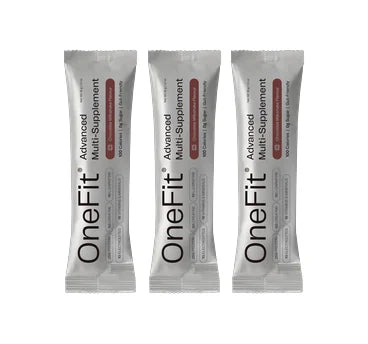
 OneFit®
OneFit®
OneFit®
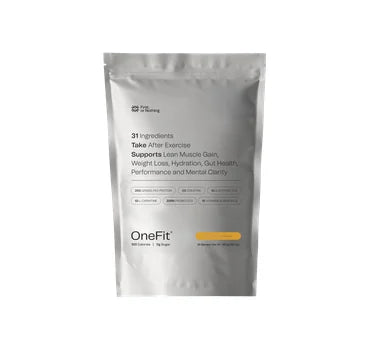
OneFit®
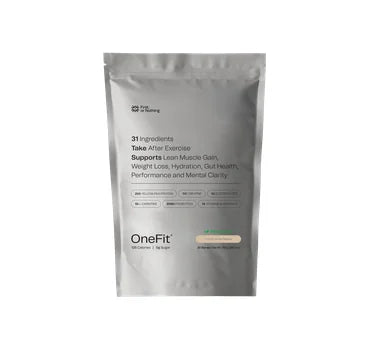
OneFit®
First or Nothing is independently tested for heavy metals, purity, and dosage accuracy.
OneLife™
OneLife™
OneLife™
© 2026 FON Health AU Pty Ltd


Please select your shipping country.
Buy from the country of your choice. Remember that we can only ship your order to addresses location in the chosen country.

 Ships in 24h
"EXCELLENT"
 rated 4.8/5 on


