


For Today & Tomorrow
The Complete System
For Performance & Longevity


 Shop
Shop
 Learn
Learn


Editorial Team
Want To Jump Ahead?
Lock in Limited Time OfferIt usually starts small. A bit of bloating after meals you’ve eaten a hundred times before.
Energy that dips harder than it used to.
Skin that suddenly becomes unpredictable for no obvious reason.
Most people don’t connect these dots. They treat them as separate problems: diet, stress, hormones, sleep.
But a growing body of clinical research suggests something more unified is often happening underneath: a disruption in the gut microbiome and its relationship with systemic inflammation.
Not a dramatic illness. Not a sudden failure. More like a slow shift in how the body regulates itself.
And because the gut is involved in digestion, immune signalling, and metabolic regulation, small imbalances rarely stay small for long.
“About 70% of the immune system resides in the gut, making it a central regulator of inflammation and overall health.”— Mayer, E.A. et al. (2015), Nature Reviews Neuroscience
Bloating is often dismissed as food-related, but persistent bloating has a more complex physiology.
Inside the gut, trillions of microbes break down carbohydrates that human enzymes cannot fully digest. When this process is balanced, gas production is minimal and predictable.
When microbial balance shifts, fermentation patterns change. Gas production increases. Transit time can slow. Sensitivity rises.
This is one reason researchers have linked bloating symptoms with altered microbiome composition in functional gastrointestinal disorders.
A landmark review in Gastroenterology (Sperber et al., 2021) highlights that disorders like IBS are strongly associated with altered gut microbiota composition and gut–brain signalling dysfunction.
The key point isn’t just “gas = bad bacteria.” It’s that the ecosystem controlling digestion becomes less efficient and more reactive.
One clinical observation from gastroenterology research is that even identical meals can produce vastly different bloating responses depending on microbial diversity and gut motility regulation.
That’s why two people can eat the same food and have completely different reactions.
Fatigue is one of the most overlooked gut-related symptoms because it feels non-digestive.
But energy production is deeply connected to gut function through nutrient absorption, inflammation control, and microbial metabolites.
A key study published in Cell Host & Microbe (Le Chatelier et al., 2013) found that individuals with lower microbial gene richness showed higher levels of metabolic dysfunction and systemic inflammation markers.
This matters because inflammation is metabolically expensive. Even low-grade chronic inflammation can shift the body into a state where energy is constantly being diverted toward immune regulation.
Clinically, this is often described as “sickness behaviour” physiology, a state where fatigue increases not because of lack of sleep, but because the body is prioritising internal balance over external output.
A well-documented review on the gut–brain axis by Cryan and Dinan (2012, Nature Reviews Neuroscience) explains how gut microbes influence brain signalling pathways involved in mood, cognition, and energy regulation.
This is why gut-related fatigue often doesn’t respond well to rest alone.
Sleep helps recovery. But it doesn’t necessarily address the upstream inflammatory or microbial drivers.
Skin issues are often treated as surface problems, but dermatology research increasingly points to systemic contributors.
The gut–skin axis describes the bidirectional relationship between intestinal health and skin conditions such as acne, eczema, and rosacea.
A review in Frontiers in Microbiology (Salem et al., 2018) discusses how gut microbiota alterations may influence inflammatory skin conditions through immune modulation pathways.
The mechanism is not direct “toxins leaking into skin”, a misconception often repeated online.
Instead, the more supported pathway involves immune signalling. When gut balance shifts, inflammatory mediators can increase, which may influence skin barrier function, oil regulation, and sensitivity responses.
In clinical dermatology, this is why some patients with persistent acne show improvement only when both topical and systemic factors are addressed.
Not always. But often enough that dermatologists now consider gut health as part of a broader inflammatory assessment.
Bloating, fatigue, and skin issues rarely exist in isolation when gut dysfunction is involved. The common denominator is often low-grade systemic inflammation.
One of the most cited studies in this area, conducted by Cani et al. (2007, Diabetes), demonstrated that changes in gut microbiota can influence metabolic endotoxemia and inflammatory markers in circulation.
This concept, metabolic endotoxemia, describes how bacterial components such as lipopolysaccharides (LPS) can enter circulation and trigger immune activation when gut barrier function is compromised.
Not everyone with gut imbalance develops this pattern. But when it occurs, the body can shift into a chronic low-grade inflammatory state.
And that state has wide-reaching effects:
It doesn’t feel like a disease. It feels like underperformance. Which is why it’s often missed.
The biggest misconception about gut health is that problems should feel obvious.
Severe pain. Acute illness. Clear digestive failure. But most gut-related dysfunction doesn’t start that way.
It starts with adaptation. The body adjusts to lower efficiency, altered microbial balance, and mild inflammation until those states feel normal.
So bloating becomes “just how I digest food.”
Fatigue becomes “normal work stress.”
Skin changes become “my skin type.”
This normalisation effect is why gut issues often progress quietly for years before being addressed.
Modern nutrition science is increasingly moving toward system-level support rather than symptom isolation.
Because bloating, fatigue, and skin issues often share upstream drivers, supporting gut health often means addressing the bigger picture rather than chasing each symptom individually.
This is where consistency matters more than quick fixes. Diet and lifestyle remain the foundation, but the right nutritional support can help reinforce the systems responsible for digestion, recovery, energy production, and inflammation control.
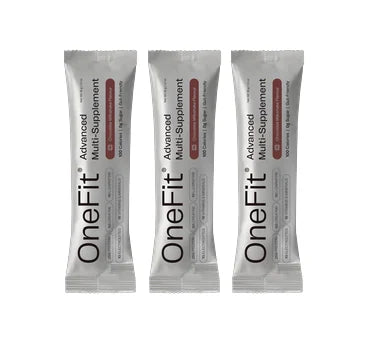
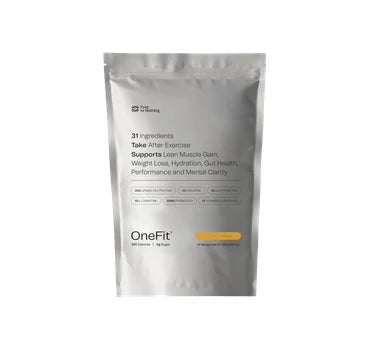
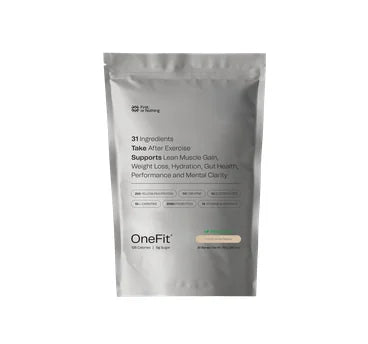
OneFit® is designed around that philosophy, combining clinically dosed protein, probiotics, electrolytes, creatine, vitamins, and essential nutrients into one daily formula that supports not just performance, but the internal systems that help the body function efficiently.
Rather than acting as a temporary fix, it helps support the body’s natural processes so digestion, energy regulation, recovery, and overall resilience can operate at a consistently higher level over time.

For Performance
$3.30/day
$297/90 DAYS
Bloating, fatigue, and skin changes are often treated as separate problems.
But research into the gut microbiome and systemic inflammation suggests they can be part of the same underlying conversation.
The earlier that pattern is recognised, the easier it is to support. Because the goal isn’t to silence symptoms, it’s to understand why they’re happening in the first place.
When gut balance is part of the issue, consistent nutritional support can play a role in helping restore stability across digestion, energy, and inflammatory response.
This is where OneFit® fits into a broader approach, not as a quick fix, but as ongoing support for the systems that keep the body regulated day to day.
Get our weekly deep-dive into performance science, research summaries, and elite training protocols.
Join 45,000+ high-performers. Unsubscribe anytime.
Every batch of First or Nothing products is independently tested for heavy metals, purity, and dosage accuracy to ensure safety and quality.

First or Nothing is independently tested for heavy metals, purity, and dosage accuracy.
 OneFit®
OneFit®
OneFit®
OneFit®
OneFit®
OneFit®
OneFit®
OneFit®
OneFit®
OneFit®
OneFit®
First or Nothing is independently tested for heavy metals, purity, and dosage accuracy.
OneLife™
OneLife™
OneLife™
© 2026 FON Health AU Pty Ltd


Please select your shipping country.
Buy from the country of your choice. Remember that we can only ship your order to addresses location in the chosen country.

 Ships in 24h
"EXCELLENT"
 rated 4.8/5 on


