
For Today & Tomorrow
The Complete System
For Performance & Longevity


 Shop
Shop
 Learn
Learn


Editorial Team
Want To Jump Ahead?
Lock in Limited Time OfferThe cold plunge has gone from elite-sport recovery room to backyard wellness ritual, but does cold water therapy actually deliver?
Yes, but probably not in the way the hype suggests.
Research suggests cold-water immersion can reduce perceived muscle soreness and may help some aspects of short-term recovery after demanding exercise. But the benefits depend heavily on what you're trying to achieve. Regularly jumping into cold water immediately after strength training may even interfere with some of the adaptations you're exercising to build.
So the better question isn't whether cold water therapy "works". It's when is it actually worth doing?
Cold water therapy generally refers to deliberately exposing the body to cold water, most commonly through cold-water immersion, ice baths or cold plunges.
In sports research, cold-water immersion (CWI) is typically performed after exercise, with studies using different combinations of water temperature, immersion time and body exposure. That variation matters because there isn't one universally proven "perfect" cold plunge protocol.
The immediate response is also more dramatic than simply feeling cold.
Sudden immersion triggers the cold shock response, a rapid increase in breathing, heart rate and blood pressure. Repeated exposure can reduce this response over time, but the initial reaction is one reason cold-water immersion shouldn't be treated as completely risk-free.
That distinction is important. A controlled recovery strategy is very different from suddenly jumping into very cold open water.
One of the strongest arguments for cold water therapy is muscle soreness.
A 2023 updated systematic review and meta-analysis, “What Parameters Influence the Effect of Cold-Water Immersion on Muscle Soreness? An Updated Systematic Review and Meta-Analysis,” examined 44 studies and found that cold-water immersion was better than control conditions for reducing muscle soreness. Benefits were seen for both immediate and delayed soreness, although longer immersion periods did not show the same advantage.
Another systematic review and meta-analysis, “The Effect of Cold Water Immersion on the Recovery of Physical Performance Revisited: A Systematic Review with Meta-Analysis,” looked at 28 studies comparing cold-water immersion with other recovery strategies after strenuous exercise. It found CWI was particularly useful for muscle soreness, while its effects on performance were more mixed and depended on the outcome being measured and the timing of the assessment.
A larger review of 68 studies reached a similar conclusion: cold-water immersion can improve some measures of recovery, including muscle soreness and certain measures of strength and power at later time points, but the response varies according to the type of exercise performed.
That's a much more useful conclusion than "ice baths are good for recovery". They can help. But they're not equally useful for every type of training or every recovery goal.
If your primary goal is building muscle, immediately cooling the body after every resistance-training session may not be the smartest strategy.
A 2021 systematic review and meta-analysis, “The Effects of Regular Cold-Water Immersion Use on Training-Induced Changes in Strength and Endurance Performance,” found that regular cold-water immersion alongside resistance training had a detrimental effect on several measures of strength adaptation. The same review did not find meaningful negative effects on endurance-training performance.
Another meta-analysis, published in 2023, “Effects of Post-Exercise Cold-Water Immersion on Resistance Training-Induced Gains in Muscular Strength,” found that post-exercise cold-water immersion attenuated gains in muscular strength, although the effect was less clear with whole-body immersion.
There's also evidence at the muscle level.
A controlled 2019 study found that repeated cold-water immersion after resistance training reduced muscle-fibre hypertrophy and blunted some markers associated with muscle protein anabolism. The researchers concluded that post-exercise CWI should be avoided when maximising muscle growth is the goal.
That doesn't mean one cold plunge after the gym is going to erase your gains. It means timing and context matter.
Cold water can make you feel recovered without necessarily making every training adaptation better. — Malta et al., Sports Medicine (2021).
If you've just completed a brutal endurance session and need to feel functional again tomorrow, cold water may have a useful role.
If you're deliberately training for hypertrophy and treating every strength session as an opportunity to stimulate muscle growth, using cold immersion immediately afterwards may deserve more consideration.
Cold exposure causes measurable changes in cardiovascular and autonomic function. A 2024 systematic review and meta-analysis of cold exposure studies found changes in measures including heart-rate variability, heart rate, and blood pressure after exposure. However, the authors also highlighted the limited evidence around how individual characteristics influence these responses.
It isn't the same thing as proving that regular cold plunges will make a healthy person significantly healthier over the long term. The internet often jumps from "this changes a physiological marker" to "this improves your health." Those aren't interchangeable statements.
For now, the strongest practical case for cold water therapy remains around exercise recovery and muscle soreness,
If you want to experiment with cold water therapy, you don't need to turn it into a daily endurance challenge. Start conservatively and treat the exposure as a recovery tool rather than a test of toughness.
A few principles make sense:
Sudden cold exposure can trigger rapid breathing, increased blood pressure, and cardiovascular stress. People with cardiovascular conditions or other health concerns should speak with an appropriate healthcare professional before deliberately exposing themselves to cold water. Never use a cold plunge alone in a situation where a loss of consciousness or impaired movement could put you at risk.
Cold water therapy is only one small piece of the recovery picture.
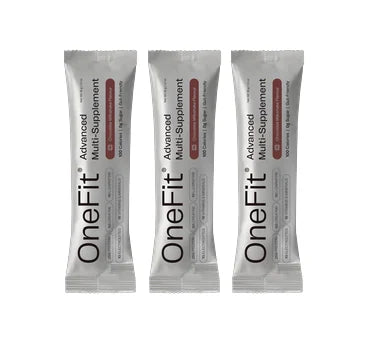
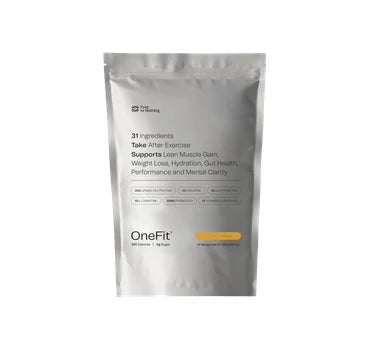
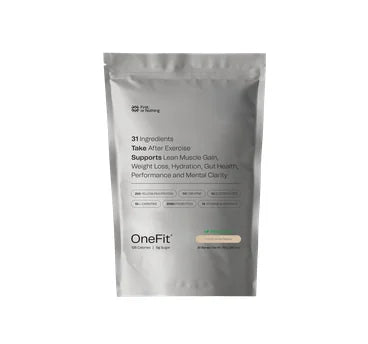
For people who want a convenient way to support their daily nutrition and active lifestyle, OneFit® combines protein, creatine monohydrate, electrolytes, L-Carnitine, probiotics and methylated B vitamins in one daily formula.
That makes it relevant to the bigger recovery conversation, not because it replaces sleep, food, sensible training or rest, but because those fundamentals work together.
The same principle applies to cold water. You don't need every recovery trend. You need the tools that make sense for your training, your goals and your routine.

For Performance
$3.30/day
$297/90 DAYS
For some people, absolutely.
The evidence supports cold-water immersion as a useful option for reducing post-exercise muscle soreness, and it may help certain aspects of recovery when you need to perform again relatively soon.
But it's not a recovery cheat code. If you're focused on building muscle, making immediate cold immersion part of every strength session may work against some of the adaptations you're trying to create.
And if you're using cold plunges purely because everyone online says they're essential for health, the evidence doesn't yet justify treating them as a wellness requirement. The smartest approach is to use cold strategically, not religiously.
Get our weekly deep-dive into performance science, research summaries, and elite training protocols.
Join 45,000+ high-performers. Unsubscribe anytime.
Every batch of First or Nothing products is independently tested for heavy metals, purity, and dosage accuracy to ensure safety and quality.

First or Nothing is independently tested for heavy metals, purity, and dosage accuracy.
 OneFit®
OneFit®
OneFit®
OneFit®
OneFit®
OneFit®
OneFit®
OneFit®
OneFit®
OneFit®
OneFit®
First or Nothing is independently tested for heavy metals, purity, and dosage accuracy.
OneLife™
OneLife™
OneLife™
© 2026 FON Health AU Pty Ltd


Please select your shipping country.
Buy from the country of your choice. Remember that we can only ship your order to addresses location in the chosen country.

 Ships in 24h
"EXCELLENT"
 rated 4.8/5 on


