



For Today & Tomorrow
The Complete System
For Performance & Longevity


 Shop
Shop
 Learn
Learn


Editorial Team
Want To Jump Ahead?
Lock in Limited Time OfferBut for a number of adults, the real problem sits deeper, inside the machinery that turns food into energy and keeps the nervous system firing properly. That depends heavily on B vitamins.
Not because they “boost” energy like a stimulant, but because they help the body release energy from carbohydrates, fats, and protein, support red blood cell formation, and keep neurological function intact. When levels run low, the drop is often subtle at first: fatigue, poor concentration, low mood, tingling, weakness, memory slips, and the sense that your body is operating below its usual standard.
This is how ordinary the risk factors are. It is not just extreme dieting or obvious malnutrition. It is ageing. It is gut issues. It is an acid-suppressing medication. It is metformin. It is drinking more than you should. It is eating “healthy” but not actually covering the nutrients that matter.
“Vitamin B” sounds like one thing, but it is really a group of eight different vitamins with overlapping jobs. In a 2016 review in Nutrients, David O. Kennedy’s paper, “B Vitamins and the Brain: Mechanisms, Dose and Efficacy—A Review,” described the B vitamins as playing “essential, closely inter-related roles in cellular functioning,” particularly in energy production and brain health. That matters because when people talk about feeling flat, foggy, or wrung out, they are often talking about systems that B vitamins help run every single day.
For this topic, three are especially important: B12, B6, and folate.
Vitamin B12 helps make red blood cells, supports DNA synthesis, and is critical for normal neurological function. The NIH Office of Dietary Supplements Vitamin B12 Health Professional Fact Sheet lists fatigue, megaloblastic anemia, numbness, tingling, balance problems, confusion, and mood changes among the consequences of deficiency. In other words, low B12 does not just leave people tired. It can affect how they think, feel, and move.
Vitamin B6 is just as relevant to the energy-and-nervous-system conversation. It acts as a coenzyme in more than 100 enzyme reactions, mostly involving protein metabolism, and it is involved in neurotransmitter synthesis, glycogen breakdown, immune function, and homocysteine metabolism. The NIH Office of Dietary Supplements Vitamin B6 Health Professional Fact Sheet notes that deficiency can show up as anemia, dermatitis, depression, confusion, and weakened immunity.
Folate, or vitamin B9, is essential for DNA synthesis and cell division. It is best known for its role in pregnancy and neural tube development, but its importance goes beyond that. Low folate can contribute to megaloblastic anemia, and folate status also intersects with B12 status in a clinically important way: high folic acid intake can correct the anemia of B12 deficiency while allowing neurological damage to continue underneath. The NIH Office of Dietary Supplements Folate Health Professional Fact Sheet highlights this masking effect clearly.
That interaction is one of the reasons B-vitamin deficiency is easy to misunderstand. Symptoms can blur together. Causes overlap. One low nutrient may hide another. And because these vitamins sit so close to the center of energy metabolism and nerve function, the symptoms do not stay neatly contained.
The explanation is that people are deficient because their diets are terrible. Sometimes that is true. Often it is incomplete.
B12 is the clearest example. According to the NIH Office of Dietary Supplements Vitamin B12 Health Professional Fact Sheet, deficiency can happen because of pernicious anemia, gastrointestinal disorders, surgery affecting the stomach or small intestine, lack of intrinsic factor, or poor absorption from food. It is also more common in people who avoid animal foods without reliable fortified foods or supplementation.
Age is a major factor too. In a 2004 review published in CMAJ, Andrès et al.’s study, “Vitamin B12 (cobalamin) deficiency in elderly patients,” wrote that vitamin B12 deficiency occurs frequently, at rates above 20%, among elderly people, and is often overlooked because the clinical signs can be subtle at first. That one finding explains why so many people spend months attributing their symptoms to “just getting older” rather than considering a nutritional issue with neurological consequences.
“Vitamin B12 deficiency occurs frequently (>20%) among elderly people, but it is often unrecognized because the clinical manifestations are subtle.” — Andrès et al., 2004, “Vitamin B12 (cobalamin) deficiency in elderly patients,” CMAJ
Medication use is another reason deficiency keeps slipping under the radar.
In 2013, Lam, Schneider, Zhao, and Corley published a large case-control study in JAMA examining acid-suppressing drugs and B12 deficiency. In “Proton Pump Inhibitor and Histamine 2 Receptor Antagonist Use and Vitamin B12 Deficiency,” they compared 25,956 patients with incident vitamin B12 deficiency against 184,199 patients without deficiency inside the Kaiser Permanente Northern California system. People who had taken proton pump inhibitors for two years or more had significantly higher odds of deficiency, and the risk climbed with dose. Those taking more than 1.5 PPI pills per day had an odds ratio of 1.95 for B12 deficiency. That is not fringe speculation. That is a huge real-world dataset.
There is a similarly concrete example with metformin, one of the most widely used drugs in the world.
In 2016, Aroda and colleagues published findings from the Diabetes Prevention Program Outcomes Study in The Journal of Clinical Endocrinology & Metabolism. In “Long-term Metformin Use and Vitamin B12 Deficiency in the Diabetes Prevention Program Outcomes Study,” participants assigned to metformin were compared with placebo, and the researchers found that combined low and borderline-low B12 levels were more common in the metformin group at both five years and thirteen years. They also found that each additional year of metformin use was associated with increased odds of B12 deficiency.
These are not edge cases.
They are common medications used by millions of adults, many of whom may never connect their fatigue, numbness, or declining focus back to a vitamin issue unless someone joins the dots for them.
B6 tells a related story. The NIH Office of Dietary Supplements Vitamin B6 Health Professional Fact Sheet, drawing on NHANES data, notes that 24% of people in the United States who do not take supplements containing vitamin B6 have low plasma PLP concentrations, the primary biomarker of B6 status. That is not proof that one in four people are clinically deficient, but it is a strong sign that “technically adequate” intake does not always translate into robust status.
The public conversation around B vitamins often stops at “tiredness.”That is far too narrow.
With B12 deficiency in particular, the nervous system can be affected in ways people dismiss for months. Tingling in the hands or feet. Numb patches. Trouble with balance. A strange heaviness in the legs. Memory slips. Mood changes. Difficulty concentrating. The NIH Office of Dietary Supplements Vitamin B12 Health Professional Fact Sheet is clear that neurological and psychiatric symptoms can occur alongside, or sometimes before, classic hematological signs.
That is one reason this issue deserves more urgency than it usually gets. People are quick to brush off fatigue, and even quicker to explain away mild nerve symptoms. They tell themselves they slept badly, trained too hard, sat too long at a desk, or are simply under pressure. Sometimes that is true. Sometimes the nervous system is telling a different story.
Folate adds another layer of complexity. The NIH Office of Dietary Supplements Folate Health Professional Fact Sheet notes that high folic acid intake can mask the anemia associated with vitamin B12 deficiency. In practical terms, that means someone can look better on one marker while the deeper neurological problem continues. For anyone writing about B vitamins, that point matters because it pushes against the simplistic idea that all deficiency problems are interchangeable or easy to spot.
Low status does not always announce itself dramatically. Sometimes it shows up as underperformance. You still go to work. You still train. You still get through the week. But your energy is less reliable, your focus is patchier, and your body feels a step behind what your life is asking from it. That is often how micronutrient issues look in the real world.
This is not a Victorian deficiency story. It is a modern one. People live on tighter schedules, eat more processed food, take more long-term medication, drink more than they admit, and often rotate through phases of restriction that look disciplined on Instagram but do not hold up nutritionally. Add gut issues, ageing, and chronic stress, and it becomes much easier to understand why B-vitamin status can slide without anyone noticing early.
Even health-conscious people are not automatically protected. Someone can eat enough calories and still miss key sources of B12. Someone can consume enough B6 on paper but still show low biomarker levels. Someone can take folic acid and still miss an underlying B12 problem. The body is not a spreadsheet. Intake, absorption, and status are related, but they are not the same thing.
That is why the smartest conversation around energy does not start with stimulants. It starts with physiology.
How well are you actually extracting and using the nutrients your cells need? How resilient is the system that turns food into fuel? And are your nerves getting the support they need, or are you trying to paper over a nutritional issue with another coffee and a better playlist? Those are the questions worth asking first. The science behind B vitamins makes that much clearer.
The answer is not pretending that every slump is a deficiency. It is taking micronutrient status seriously enough to stop treating it like filler in the health conversation.
B vitamins matter because they support the processes that keep energy production moving and the nervous system online. When intake is poor, absorption is impaired, or demand is not being met, the effects can spread quietly through daily life. A good routine should reflect that reality. It should cover the basics first, rather than waiting until the body starts waving bigger red flags.
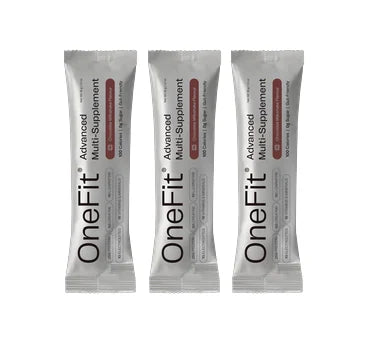
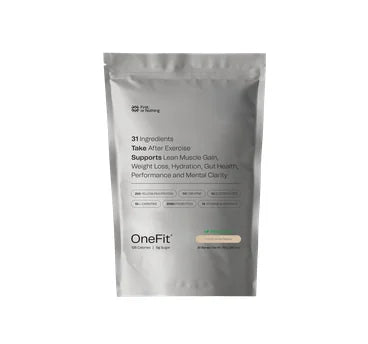
That is where a comprehensive daily formula makes sense, not as a magic fix, but as practical nutritional support. If the problem is that modern life makes it too easy to miss key nutrients, the logical answer is not guesswork. It is a formula built to cover those gaps consistently. That is the role OneFit can play here: not as a cure-all, but as a smarter daily baseline for people whose energy, focus, and resilience depend on getting the fundamentals right.

For Performance
$3.30/day
$297/90 DAYS
For someone eating on the run, training hard, working long hours, or simply wanting better nutritional coverage without overcomplicating the routine, OneFit makes sense because it answers the exact problem this article has laid out: small deficiencies and low-status gaps can add up fast when the systems behind energy and nerve health are underfed. If your energy feels inconsistent and the usual answers are not landing, it may be worth looking at the fundamentals before chasing another quick hit. B vitamins are part of that foundation, and covering those bases consistently is a far smarter move than waiting for underperformance to become something more obvious.
Get our weekly deep-dive into performance science, research summaries, and elite training protocols.
Join 45,000+ high-performers. Unsubscribe anytime.
Every batch of First or Nothing products is independently tested for heavy metals, purity, and dosage accuracy to ensure safety and quality.

First or Nothing is independently tested for heavy metals, purity, and dosage accuracy.
 OneFit®
OneFit®
OneFit®
OneFit®
OneFit®
OneFit®
OneFit®
OneFit®
OneFit®
OneFit®
OneFit®
First or Nothing is independently tested for heavy metals, purity, and dosage accuracy.
OneLife™
OneLife™
OneLife™
© 2026 FON Health AU Pty Ltd


Please select your shipping country.
Buy from the country of your choice. Remember that we can only ship your order to addresses location in the chosen country.

 Ships in 24h
"EXCELLENT"
 rated 4.8/5 on


