


For Today & Tomorrow
The Complete System
For Performance & Longevity


 Shop
Shop
 Learn
Learn


Editorial Team
Want To Jump Ahead?
Lock in Limited Time OfferMost people assume they need more sleep, more water, or another coffee.
What rarely crosses their mind is magnesium. It's not as trendy as protein or creatine, but magnesium is one of the body's most important minerals. It helps power your cells, regulate your nervous system, support healthy muscle function, and even plays a role in how well you sleep. Yet many adults don't consume enough through their diet, according to the National Institutes of Health (NIH).
That doesn't mean every muscle cramp or restless night is caused by low magnesium. But when your intake consistently falls short, your body can start sending subtle signals that something isn't quite right.
Every heartbeat, every muscle contraction, and every nerve impulse depends on an intricate series of chemical reactions. Magnesium sits at the centre of many of them.
The mineral acts as a cofactor for more than 300 enzyme systems involved in energy production, protein synthesis, muscle and nerve function, blood glucose regulation, and blood pressure control. As explained by de Baaij, Hoenderop, and Bindels in their landmark 2015 review published in Physiological Reviews, magnesium is essential for maintaining normal cellular function throughout the body.
One of its most important jobs is helping activate adenosine triphosphate (ATP), the molecule that stores and transfers energy inside every cell. Without magnesium, ATP cannot function effectively.
That may explain why low magnesium intake doesn't usually cause one obvious symptom. Instead, it can affect multiple systems at once, leaving people feeling tired, run down, or slower to recover from everyday physical and mental demands.
Because magnesium supports so many functions, inadequate intake can show up in different ways. None of these symptoms prove you have a magnesium deficiency, but together they can be a reason to look more closely at your nutrition and speak with a healthcare professional if symptoms persist.
If you've ever been jolted awake by a painful calf cramp, you've probably blamed dehydration.
While dehydration is one possible cause, magnesium also plays an important role in normal muscle contraction and relaxation. Low magnesium can increase neuromuscular excitability, making muscles more prone to cramping or twitching.
Athletes and people who exercise regularly may notice this more often, particularly if they're also losing fluids and electrolytes through sweat.
Magnesium doesn't act like a sleeping tablet, but it does help regulate several processes involved in healthy sleep.
It contributes to normal nerve function and supports the activity of gamma-aminobutyric acid (GABA), a neurotransmitter that helps calm the nervous system.
In a double-blind, placebo-controlled trial, Abbasi and colleagues (2012) studied 46 older adults with insomnia. After eight weeks, participants taking magnesium experienced improvements in sleep time, sleep efficiency, and lower early morning cortisol compared with the placebo group.
While larger studies are still needed, the findings suggest magnesium may benefit people whose sleep is affected by inadequate intake.
Stress doesn't simply affect magnesium status; magnesium status may also influence how the body responds to stress.
A systematic review published in Nutrients by Boyle, Lawton, and Dye (2017) found that magnesium supplementation may reduce subjective anxiety in some people, particularly those experiencing mild anxiety or who are vulnerable to stress. The authors also noted that more high-quality clinical trials are needed before firm conclusions can be drawn.
What's already well established is that chronic stress can increase magnesium losses through urine, potentially creating a cycle where stress and low magnesium reinforce one another.
Hard training challenges your muscles. Recovery is the process of repairing that damage and preparing for the next session.
Magnesium contributes to normal energy metabolism and muscle function, making it one of the many nutrients involved in effective recovery. It won't eliminate soreness overnight, but consistently meeting your magnesium needs helps support the biological processes that allow recovery to happen.
When your body struggles to produce and use energy efficiently, fatigue often follows.
Because magnesium is required for ATP activation, inadequate intake may contribute to feelings of low energy. Fatigue is a common symptom with many possible causes, so it's important not to assume magnesium is the answer without proper medical assessment.
Training can feel harder than usual for many reasons.
If your muscles aren't contracting and relaxing efficiently, or if your energy production is compromised, everyday exercise may feel more demanding than expected.
For active people, ensuring adequate magnesium intake is one part of supporting overall performance and recovery.
Researchers have been studying magnesium and migraine for decades.
Several clinical guidelines now recognise magnesium supplementation as a potential preventive option for certain people with recurrent migraines, although it isn't appropriate for every individual and should be discussed with a healthcare professional.
Magnesium is required for more than 300 enzyme systems that regulate diverse biochemical reactions in the body, including protein synthesis, muscle and nerve function, blood glucose control, and blood pressure regulation.
— National Institutes of Health Office of Dietary Supplements
Magnesium isn't difficult to find. It's found naturally in leafy green vegetables, legumes, nuts, seeds, and whole grains.
The challenge is that many modern diets contain fewer of these foods than they once did. Highly processed foods often provide fewer essential minerals, while busy schedules make convenience a priority over balanced nutrition.
Some groups are also at greater risk of inadequate magnesium intake or deficiency, including older adults, people with gastrointestinal disorders that affect nutrient absorption, individuals with type 2 diabetes, and those taking certain medications such as some diuretics or proton pump inhibitors.
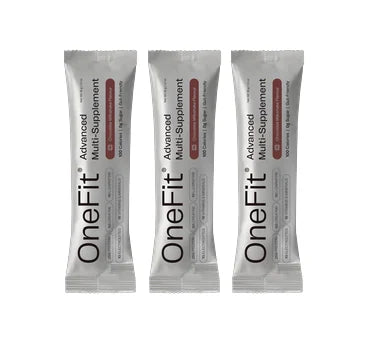
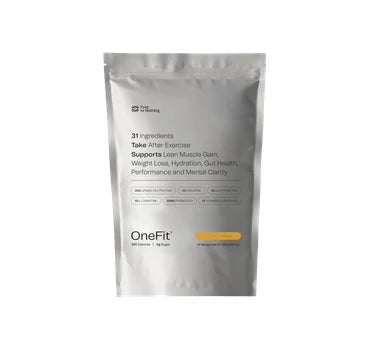
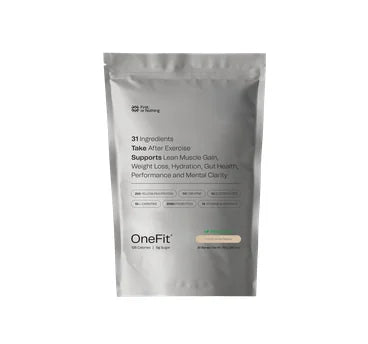
A common example is someone squeezing in a workout before work, grabbing takeaway for lunch, and relying on quick snacks to get through the day. They may be eating enough calories but still fall short on the nutrients their body needs to support energy, recovery, and overall health. While whole foods should always be the foundation, building a simple, consistent nutrition routine can help close those gaps. That's the idea behind OneFit®, a convenient daily supplement designed to support recovery, performance, and everyday wellness alongside a balanced diet.

For Performance
$3.30/day
$297/90 DAYS
There's no miracle nutrient that fixes poor sleep, eliminates stress, or transforms recovery overnight.
Health is built on consistent habits: eating a varied diet, staying active, prioritising sleep, and meeting your body's nutritional needs.
Magnesium is one of those foundational nutrients. When your intake is adequate, you're supporting the systems that help produce energy, regulate muscle function, and maintain a healthy nervous system.
If your diet regularly falls short, focusing on magnesium-rich foods is the best place to begin. Pumpkin seeds, almonds, spinach, black beans, edamame, whole grains, and other minimally processed foods are excellent sources.
For people with active lifestyles, consistency is often the biggest challenge. That's where a comprehensive daily supplement like OneFit ® can complement a balanced diet, helping support your everyday nutrition so you can stay focused on training, recovery, and performing at your best.
Good health isn't built on one ingredient; it's built on the habits you repeat every day. Pairing nutrient-rich foods with a consistent nutrition routine can help you build a stronger foundation for long-term performance and wellbeing.
Get our weekly deep-dive into performance science, research summaries, and elite training protocols.
Join 45,000+ high-performers. Unsubscribe anytime.
Every batch of First or Nothing products is independently tested for heavy metals, purity, and dosage accuracy to ensure safety and quality.

First or Nothing is independently tested for heavy metals, purity, and dosage accuracy.
 OneFit®
OneFit®
OneFit®
OneFit®
OneFit®
OneFit®
OneFit®
OneFit®
OneFit®
OneFit®
OneFit®
First or Nothing is independently tested for heavy metals, purity, and dosage accuracy.
OneLife™
OneLife™
OneLife™
© 2026 FON Health AU Pty Ltd


Please select your shipping country.
Buy from the country of your choice. Remember that we can only ship your order to addresses location in the chosen country.

 Ships in 24h
"EXCELLENT"
 rated 4.8/5 on


