

For Today & Tomorrow
The Complete System
For Performance & Longevity


 Shop
Shop
 Learn
Learn


Editorial Team
Want To Jump Ahead?
Lock in Limited Time OfferMost people blame getting older. But what often changes first isn't your age. It's your muscle health.
Most of us take those movements for granted. We assume our muscles are simply there to help us move. In reality, they're quietly working behind the scenes every hour of the day, influencing your metabolism, supporting your bones, helping regulate blood sugar, and keeping you steady on your feet.
That's why muscle health matters at every age.
Whether you're in your twenties building a foundation for the future, balancing work and family in your forties, or staying active in retirement, healthy muscles do far more than generate strength. They help determine how well your body functions today and how well it will continue to function decades from now.
Ask someone what muscles do, and they'll probably say they help you run, lift, or exercise. They're right, but that's only part of the story.
Skeletal muscle makes up roughly 40% of body weight in healthy adults, making it the largest organ system in the body by mass. It's also one of the most metabolically active tissues you have. Every meal you eat relies on healthy muscle to help manage where that energy goes next.
In the landmark study The Effect of Insulin on the Disposal of Intravenous Glucose, published in Diabetes, DeFronzo and colleagues (1981) demonstrated that skeletal muscle is the primary site where insulin helps remove glucose from the bloodstream. Put simply, healthy muscle allows your body to use energy more efficiently instead of letting excess glucose remain in circulation.
That's one reason researchers increasingly view muscle as a cornerstone of metabolic health rather than simply a source of strength. Muscle also acts as a communication network.
Every time you exercise, your muscles release signalling proteins called myokines. These molecules travel through the bloodstream and influence other organs, helping regulate inflammation, metabolism, immune function, and potentially even brain health. In their influential review published in Nature Reviews Endocrinology, Pedersen and Febbraio (2012) described skeletal muscle as a "secretory organ," changing the way scientists think about exercise and whole-body health.
Your muscles even serve as an important reserve during illness or injury. When your body needs extra amino acids to repair damaged tissue or support the immune system, muscle provides many of the building blocks required for recovery. That's why healthcare professionals often pay close attention to muscle loss after surgery or during prolonged illness, as it can affect how well people recover.
Seen this way, muscle isn't simply something you train in the gym. It's a system that quietly supports your health every single day.
The role of muscle changes throughout life, but its importance never fades.
In your teens and twenties, healthy muscle supports growth, athletic performance, and physical resilience. It's also the time when your body is most responsive to building muscle, creating a foundation that supports long-term health.
During your thirties and forties, muscle helps maintain a healthy metabolism, supports posture during long hours at a desk, and provides the strength for everyday tasks like lifting children, carrying shopping bags, or staying active on weekends. While age-related muscle loss can begin during adulthood, especially in people who are inactive, regular exercise and adequate protein can help slow the process.
As you get older, muscle becomes less about performance and more about preserving independence. Everyday activities such as climbing stairs, getting out of a chair, carrying groceries, or catching yourself before a fall all rely on muscle strength, balance, and coordination.
This is why physiotherapists often use the 30-second chair stand test to assess lower-body strength. Difficulty standing repeatedly from a chair without using your hands can be an early sign of declining muscle function.
Researchers increasingly focus on healthspan rather than lifespan. Living longer matters, but staying active, capable, and independent throughout those extra years is what truly defines healthy ageing, and healthy muscles help make that possible.
Your muscles and bones are constantly working together.
Every time you walk, climb stairs, lift a shopping bag, or complete a strength workout, your muscles pull on your bones. That small amount of stress sends a signal for bones to repair and strengthen themselves. Without it, both muscle and bone gradually lose density over time.
That's why strength training isn't recommended only for building muscle; it's also one of the most effective ways to support bone health as you age.
Muscle also plays a critical role in balance and stability. Think about the last time you tripped over a curb or slipped on wet pavement. Before you even had time to react, your muscles had already begun working to steady your body. The stronger and more responsive those muscles are, the better your chances of recovering your balance before a fall happens.
This becomes increasingly important later in life.
According to the World Health Organization, falls are the second leading cause of unintentional injury deaths worldwide, and adults over 60 carry the greatest burden of serious fall-related injuries. While many factors contribute to falls, maintaining muscle strength and balance is one of the most effective ways to reduce the risk.
Researchers have reached the same conclusion.
In "Sarcopenia: Revised European Consensus on Definition and Diagnosis (EWGSOP2)," published in Age and Ageing, Cruz-Jentoft et al. (2019) concluded that muscle strength is an even better predictor of adverse health outcomes than muscle mass alone. The expert panel recommended prioritising strength when assessing healthy ageing because lower muscle strength is strongly associated with falls, disability, hospitalisation, and reduced quality of life.
"Muscle strength is now recognised as a better predictor of adverse outcomes than muscle mass." — Cruz-Jentoft AJ et al., Age and Ageing (2019).
Perhaps the most encouraging finding is that muscle remains remarkably adaptable throughout life.
People often assume that once they reach their sixties or seventies, building strength is no longer possible. Research consistently shows the opposite. Adults well into their seventies and eighties can significantly improve strength, balance, and physical function through regular resistance training combined with adequate protein intake.
A good example is Ernestine Shepherd, who didn't begin exercising until she was 56 years old after making a promise to her sister to live a healthier life. She later became one of the world's oldest competitive female bodybuilders. While her journey is extraordinary, it reflects a principle researchers have demonstrated repeatedly: the human body retains an impressive ability to adapt when muscles are challenged consistently.
You don't have to become a bodybuilder to benefit. Improving your ability to carry groceries, play with your grandchildren, enjoy long walks, or remain confident on your feet are meaningful goals in themselves.
Maintaining healthy muscles doesn't require an extreme fitness routine. The biggest difference comes from consistently doing the basics: regular strength training, eating enough protein, staying active, and giving your body time to recover.
Bodyweight exercises, resistance bands, or lifting weights a few times a week can all help preserve muscle strength. Combined with quality nutrition, sleep, and hydration, these simple habits support muscle health at every stage of life.
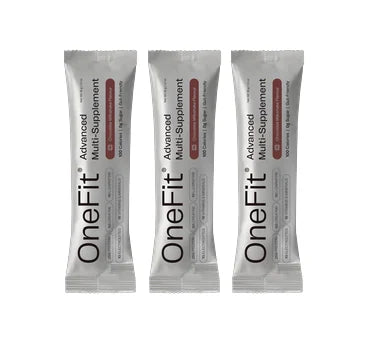
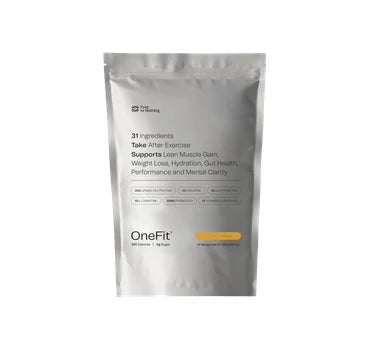
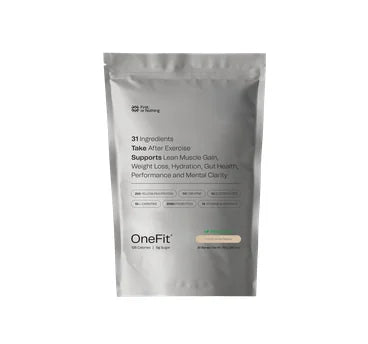
Of course, staying consistent isn't always easy. Busy schedules can make it difficult to get enough protein or juggle multiple supplements. That's where OneFit® naturally fits. Designed as a convenient all-in-one daily supplement, it provides 25g of protein, 5g of creatine monohydrate, plus electrolytes, probiotics, L-carnitine, and methylated B vitamins to help support muscle maintenance, recovery, and everyday performance, making it easier to stay on track with your long-term health goals.

For Performance
$3.30/day
$297/90 DAYS
Most people don't spend much time thinking about their muscles until everyday tasks begin to feel harder. But muscle health influences far more than how much weight you can lift; it supports your metabolism, protects your bones, improves balance, and helps you stay active and independent throughout life.
The next time you carry your groceries, climb a flight of stairs, or get up from the floor without thinking twice, remember that those ordinary moments are made possible by healthy, resilient muscles.
Looking after them doesn't require perfection. It starts with consistent movement, strength training, quality nutrition, and good recovery habits. And if you're looking for a simple way to support those habits, an all-in-one supplement like OneFit ® can help make it easier to meet your daily protein and recovery needs, so you can keep doing the things you love at every age.
Get our weekly deep-dive into performance science, research summaries, and elite training protocols.
Join 45,000+ high-performers. Unsubscribe anytime.
Every batch of First or Nothing products is independently tested for heavy metals, purity, and dosage accuracy to ensure safety and quality.

First or Nothing is independently tested for heavy metals, purity, and dosage accuracy.
 OneFit®
OneFit®
OneFit®
OneFit®
OneFit®
OneFit®
OneFit®
OneFit®
OneFit®
OneFit®
OneFit®
First or Nothing is independently tested for heavy metals, purity, and dosage accuracy.
OneLife™
OneLife™
OneLife™
© 2026 FON Health AU Pty Ltd


Please select your shipping country.
Buy from the country of your choice. Remember that we can only ship your order to addresses location in the chosen country.

 Ships in 24h
"EXCELLENT"
 rated 4.8/5 on


