
For Today & Tomorrow
The Complete System
For Performance & Longevity


 Shop
Shop
 Learn
Learn


Editorial Team
Want To Jump Ahead?
Lock in Limited Time OfferThe suitcase that suddenly feels heavier. The stairs that leave you more breathless than they used to. The jar lid that will not budge. The moment you lower yourself to the floor and realise getting back up now requires a plan.
For many people over 50, that is the first sign that something is changing. Not overnight. But steadily.
The thing slipping away is often not motivation, youthfulness or “fitness” in the way most people think of it. It is muscle, and the strength, balance and metabolic health that come with it.
In a 2000 study published in the Journal of Applied Physiology, Ian Janssen, Steven Heymsfield, ZiMian Wang, and Robert Ross used whole-body MRI to examine skeletal muscle in 468 adults aged 18 to 88. They found that older adults had substantially less muscle than younger adults, with the decline especially clear in the lower body, the area that matters every time you climb stairs, stand from a chair or catch yourself from a fall.
That finding has only become more relevant. In 2012, W. Kyle Mitchell and colleagues published a quantitative review in Frontiers in Physiology showing that ageing is linked not only with declining muscle size, but also with falling strength, a combination that can affect mobility, independence and long-term health.
Healthy ageing is not just about avoiding illness. It is about staying physically capable enough to keep living the way you want.
There is a reason doctors, physiotherapists and exercise scientists talk so much about muscle in later life.
Muscle is not just the tissue that makes arms look defined in a T-shirt. It helps regulate blood sugar, supports joints, protects bones, powers everyday movement and gives you the strength to recover when life throws you off balance.
Sarcopenia, the age-related loss of muscle mass and function, is now recognised as a major health issue in older adults. Alfonso J. Cruz-Jentoft and colleagues described sarcopenia in The Lancet as a progressive skeletal muscle disorder associated with falls, frailty, functional decline and mortality.
That sounds clinical, but the truth is simple.
A 58-year-old who used to walk the dog easily starts avoiding hills. A 64-year-old stops carrying the laundry basket upstairs. A 70-year-old trips on a footpath and does not recover quickly enough to stay upright. None of these moments feels like a medical event at first. They feel like normal ageing.
But “normal” does not mean harmless. The lower body is especially important. Quads, glutes, calves and hips are what help you get out of a chair, step over a gutter, climb, brake, turn and stabilise. When those muscles weaken, life gets smaller in ways people often do not notice until their routines have already changed.
The good news is that muscle responds to use at almost any age. It needs a signal. That signal is resistance: lifting weights, using machines, training with bands, doing controlled bodyweight movements or carrying loads in daily life.
You do not need to train like a 25-year-old athlete. You do need to give your body a regular reason to keep strength.
Walking is one of the best things you can do for your health. It is accessible, low-cost, joint-friendly for many people and powerful for cardiovascular fitness, mood and weight management.
But walking is not the full prescription after 50.
The World Health Organization recommends that older adults do at least 150 to 300 minutes of moderate-intensity aerobic activity per week, or 75 to 150 minutes of vigorous activity, along with muscle-strengthening activity on two or more days per week. WHO also recommends multicomponent activity that includes balance and strength training for older adults, particularly to help reduce fall risk.
That “along with” matters.
In 2022, Min Zhao and colleagues published a cohort study in JAMA Network Open looking at more than 115,000 adults aged 65 and older. The study found that older adults who met aerobic activity guidelines and also did muscle-strengthening activity had a lower mortality risk than those who did not. The authors also noted that the benefits of activity guidelines appeared important even among adults aged 85 and older.
Another 2022 JAMA Network Open study, led by Eleanor Watts, analysed 272,550 older adults in the NIH-AARP Diet and Health Study. It found that activities such as walking, cycling, swimming, racquet sports, golf and running were associated with lower risks of all-cause mortality compared with not participating.
The pattern is clear: movement matters, but variety matters too.
A smart week after 50 might include brisk walking, two short strength sessions, gentle mobility work and a few minutes of balance practice. That does not sound dramatic enough for a fitness transformation ad, but it is exactly the sort of repeatable routine that protects real life.
Think of a woman in her late 50s who walks every morning but feels weaker carrying groceries from the car. Adding two 30-minute strength sessions a week — chair squats, rows, step-ups, deadlifts with light dumbbells, wall push-ups and loaded carries — directly trains the movements she is already struggling with. Within weeks, the goal is not to look different in a mirror. It is to feel different in the supermarket car park.
That is the kind of fitness that matters after 50.
“Healthy ageing is not just adding years. It is keeping enough strength to use them.”
Many people eat less protein as they get older without realising it. Breakfast becomes toast. Lunch becomes a salad. Dinner gets lighter. Appetite may drop, cooking may feel less appealing and old diet rules about “eating less” can become hard to shake.
The problem is that muscles need raw materials. In 2013, Jürgen Bauer and colleagues published the PROT-AGE Study Group position paper in the Journal of the American Medical Directors Association. The group recommended that adults over 65 consume at least 1.0 to 1.2 grams of protein per kilogram of body weight per day to help maintain or regain lean body mass and function. They also advised higher protein intake. at least 1.2 grams per kilogram per day, for older adults who are exercising or otherwise active.
For a 70 kg adult, that baseline recommendation is roughly 70 to 84 grams of protein a day. For someone active, the target may be higher.
This does not mean eating like a bodybuilder. It means making protein visible at each meal: eggs or Greek yoghurt at breakfast, fish or chicken at lunch, tofu or lean meat at dinner, legumes with grains, dairy, soy foods or a well-timed protein-rich smoothie after training.
The reason is not cosmetic. Protein supports muscle repair and maintenance, especially when combined with resistance training. Without enough of it, the signal from exercise is weaker.
There is also a trap here. People often respond to midlife weight gain by cutting food aggressively. They eat less, move more and congratulate themselves for being disciplined, until they feel flat, sore, hungry and weaker.
Fat loss may be a reasonable goal for some people. Losing strength is not. After 50, the aim is not simply to make the body smaller. It is to keep it capable.
Most people do not train balance because it feels too basic. Then they slip on wet tiles, misjudge a curb or stumble when the dog pulls the lead.
Balance is not a party trick. It is a survival skill made up of vision, foot strength, ankle mobility, hip control, core stability, reaction time and confidence. It also declines when it is not challenged.
The CDC advises that adults 65 and older need aerobic, muscle-strengthening and balance activities each week, noting that people continue to benefit from physical activity throughout life.
Balancing work can be simple. Stand on one leg near a bench. Practise slow step-downs. Walk heel-to-toe down a hallway. Do controlled sit-to-stands without using your hands. Try tai chi. Carry a shopping bag evenly on each side. Walk safely on grass or sand when conditions allow.
These small drills help your body react faster when the environment is not perfect, which is exactly when falls happen.
Strength and balance also reinforce each other. Stronger legs make it easier to stabilise. A better balance makes you more confident when moving. More confidence usually means more activity, and more activity helps preserve muscle.
That loop is worth protecting.
The first myth is that it is too late to start. It is not. Age changes the starting point, not the value of training. Older adults can improve strength and function with appropriately progressed resistance exercise. The goal is not to train like a 25-year-old. It is to build enough strength to keep doing ordinary things without hesitation.
The second myth is that walking is enough. Walking is excellent, but it does not replace strength training. The major guidelines are consistent: aerobic activity, muscle-strengthening work and balance all matter in later life.
The third myth is that protein is only relevant for athletes. Protein is relevant for anyone trying to maintain muscle, recover from training and age with strength. The PROT-AGE recommendation exists because older adults have specific needs, not because they are trying to win bodybuilding competitions.
The fourth myth is that supplements can do the work for you. They cannot. No supplement replaces lifting, walking, protein, sleep, hydration or medical advice. But the right supplement can make the basics easier to repeat, especially when the alternative is juggling separate tubs of protein, creatine, electrolytes, greens, collagen, probiotics and magnesium.
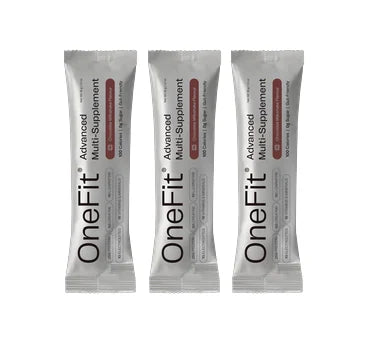
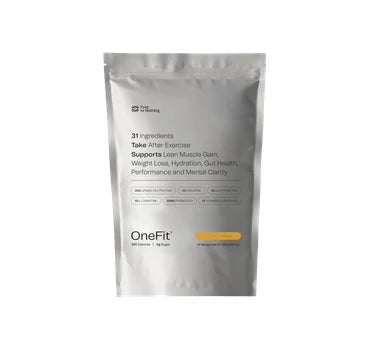
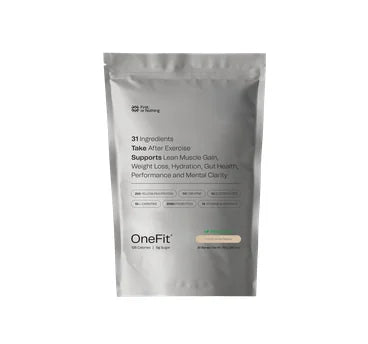
That is where OneFit® makes sense. After 50, the best supplement is not the one with the longest ingredient list. It is the one that helps you stay consistent with the habits that actually protect muscle, energy and recovery.

For Performance
$3.30/day
$297/90 DAYS
The body after 50 does not need punishment. It needs better signals: lift something, walk often, eat enough protein, practise balance and recover as it matters.
Healthy ageing is not about refusing to get older. It is about staying strong enough to keep choosing your life. For readers who already train, walk or want to start again, OneFit fits naturally here: not as a shortcut, but as a simple daily way to support protein, creatine, hydration and recovery in one routine.
Get our weekly deep-dive into performance science, research summaries, and elite training protocols.
Join 45,000+ high-performers. Unsubscribe anytime.
Every batch of First or Nothing products is independently tested for heavy metals, purity, and dosage accuracy to ensure safety and quality.

First or Nothing is independently tested for heavy metals, purity, and dosage accuracy.
 OneFit®
OneFit®
OneFit®
OneFit®
OneFit®
OneFit®
OneFit®
OneFit®
OneFit®
OneFit®
OneFit®
First or Nothing is independently tested for heavy metals, purity, and dosage accuracy.
OneLife™
OneLife™
OneLife™
© 2026 FON Health AU Pty Ltd


Please select your shipping country.
Buy from the country of your choice. Remember that we can only ship your order to addresses location in the chosen country.

 Ships in 24h
"EXCELLENT"
 rated 4.8/5 on


