
For Today & Tomorrow
The Complete System
For Performance & Longevity


 Shop
Shop
 Learn
Learn


Editorial Team
Want To Jump Ahead?
Lock in Limited Time OfferThere’s a good chance the problem isn’t your training. It’s that you’re spending money on the wrong supplement priority.
Most people training for strength or muscle growth still misunderstand one surprisingly basic question.
Should you be taking protein? Or creatine?
The answer matters more than people think, because while both products dominate gym shelves and fitness conversations, they solve completely different physiological problems. Treating them as interchangeable, which millions of people still do, can quietly slow progress, even when training and nutrition look solid on paper.
This is partly why so many people hit frustrating plateaus despite doing what they believe is everything right.
The truth is simple. Protein helps your body recover from training. Creatine helps your body perform better during training.
And understanding that distinction changes everything.
If muscle growth were reduced to a simple biological equation, protein would remain the non-negotiable variable.
Every resistance training session creates microscopic tears within muscle fibres. This damage is intentional. The body responds by rebuilding those fibres through a process known as muscle protein synthesis, gradually increasing strength and lean mass as the tissue adapts to repeated stress over time.
That repair process depends entirely on amino acids. Protein provides them.
More specifically, essential amino acids, particularly leucine, act as signalling molecules that trigger the recovery process responsible for muscle rebuilding.
This relationship between protein intake and muscle growth has been extensively studied, but one of the most important findings in recent years challenged a belief the supplement industry has pushed for decades.
More protein does not necessarily mean more muscle.
In 2018, researcher Robert Morton and colleagues published a major meta-analysis in the British Journal of Sports Medicine, examining data from 49 clinical studies involving 1,863 healthy adults undergoing resistance training.
Their conclusion was significant.
Protein supplementation improved lean mass development and strength, but benefits plateaued once intake reached approximately 1.6 grams per kilogram of body weight per day.
For an 80-kilogram person, that works out to roughly 128 grams of protein daily. Consuming substantially more than that showed little additional benefit for muscle growth.
“Protein supplementation beyond approximately 1.6 g/kg/day did not confer further significant gains in fat-free mass.”
— Morton RW et al., British Journal of Sports Medicine (2018)
For years, gym culture has treated protein intake as a game of excess. The actual research paints a much narrower target.
One of the biggest misconceptions in sports nutrition is the idea that creatine directly causes muscle growth.
Technically, it doesn’t.
Creatine works through a completely separate mechanism, one tied not to muscle repair but to energy production.
Inside muscle cells, creatine is stored as phosphocreatine. Its primary function is helping regenerate ATP adenosine triphosphate, which acts as the body’s immediate fuel source during short bursts of intense physical activity.
The problem is ATP depletes rapidly.
During heavy lifting or explosive movement, available ATP stores can begin dropping within seconds, which is exactly why performance begins fading toward the end of a difficult set.
Supplementing creatine increases phosphocreatine availability, allowing ATP to regenerate faster and helping muscles sustain force production slightly longer before fatigue sets in.
In practical terms, this often means squeezing out an additional repetition or maintaining higher output during repeated high-intensity effort.
That may sound insignificant. But small improvements repeated over months of consistent training create measurable differences in long-term adaptation. And the research supporting this is unusually consistent.
In 2017, Richard Kreider and researchers from the International Society of Sports Nutrition published one of the most comprehensive reviews on creatine supplementation to date.
Their conclusion was unambiguous. Creatine monohydrate consistently improves strength development, lean mass accumulation, exercise capacity, and repeated power output across a wide range of athletic populations.
Several studies reviewed showed strength improvements ranging between 5 and 15 percent compared with placebo groups.
That is not a marginal difference. It directly affects training quality. And training quality drives progress.
The problem with comparing creatine and protein is that the comparison itself doesn’t make biological sense. This has become one of fitness culture’s most persistent false choices.
Protein and creatine do not compete with each other because they are solving different bottlenecks. Protein addresses tissue repair. Creatine improves energy availability during high-output exercise.
One supports recovery after training. The other helps maximize the training stimulus itself.
Consider a simple example.
Imagine two recreational lifters training four days per week under identical conditions. Both consistently consume 140 grams of protein daily, comfortably covering muscle recovery requirements.
One adds creatine supplementation. The other doesn’t.
The creatine user manages one additional repetition on compound lifts during several working sets each week. That small difference seems trivial when viewed in isolation.
But after six months, that athlete has accumulated hundreds of additional high-quality repetitions under mechanical tension. Those repetitions compound into stronger adaptation signals, better strength progression, and often faster long-term muscle development.
This is exactly why elite athletes rarely choose between these supplements. Because there was never a competition to begin with.
The honest answer is that it depends entirely on what’s holding your progress back right now.
If your daily protein intake is inconsistent, that becomes the first problem to fix. Muscle tissue simply cannot recover properly without a steady supply of amino acids to support muscle protein synthesis, no matter how well structured your training program is.
But if your nutrition is already solid and you’re consistently hitting your protein targets, yet your strength or performance has plateaued, creatine often becomes the more relevant addition. At that point, the limitation is no longer recovery; it’s output. How much force you can produce, how many quality reps you can sustain, and how much total training volume you can accumulate before fatigue forces you to stop.
This is where most people quietly stall. Not because they aren’t trying hard enough, but because they end up over-indexing on one side of the equation. Some focus heavily on recovery nutrition but never fully address performance capacity. Others chase performance supplements while their baseline protein intake is still too low to support adaptation in the first place.
Long-term progress tends to come from balancing both systems rather than treating them as separate goals.
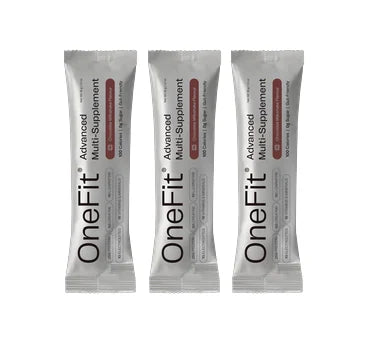
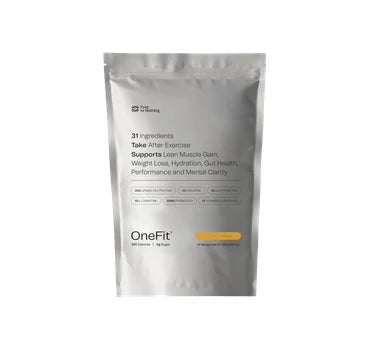
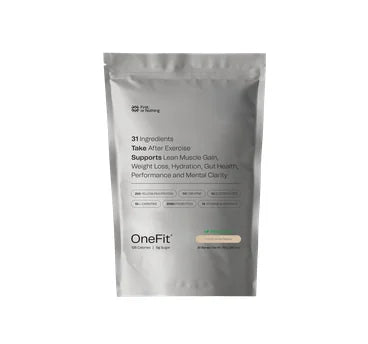
That’s where OneFit® sits differently in the conversation. Instead of forcing you to think about protein and creatine as separate supplements to manage, it combines 25g hydrolysed protein and 5g creatine monohydrate in one daily system, alongside a full performance and recovery matrix that includes electrolytes, L-carnitine, vitamins, minerals, and gut support
The idea isn’t to add more complexity. It’s to remove the friction that usually causes people to fall off consistency, especially when juggling multiple tubs, timing rules, and separate dosing schedules.
For most people, progress doesn’t stall because they lack information. It stalls because execution becomes too fragmented to sustain over time. OneFit® is built around simplifying that equation so daily recovery and performance support happen automatically, not occasionally.

For Performance
$3.30/day
$297/90 DAYS
The supplement industry has spent years turning creatine and protein into opposing choices. Science says otherwise.
Your body needs protein to repair muscle tissue after training. Your muscles need creatine to sustain force production during high-intensity effort. Ignoring either side of that equation makes progress harder than it needs to be.
For people trying to simplify recovery and performance support into one daily system rather than managing multiple supplements individually, this is where a more complete approach starts to make sense. OneFit ® is designed around exactly that idea, bringing recovery and performance support together in a single, consistent daily routine so nothing important gets left out or overcomplicated.
At that point, the goal stops being about choosing between supplements, and starts being about making sure both sides of training are covered properly, every single day.
Get our weekly deep-dive into performance science, research summaries, and elite training protocols.
Join 45,000+ high-performers. Unsubscribe anytime.
Every batch of First or Nothing products is independently tested for heavy metals, purity, and dosage accuracy to ensure safety and quality.

First or Nothing is independently tested for heavy metals, purity, and dosage accuracy.
 OneFit®
OneFit®
OneFit®
OneFit®
OneFit®
OneFit®
OneFit®
OneFit®
OneFit®
OneFit®
OneFit®
First or Nothing is independently tested for heavy metals, purity, and dosage accuracy.
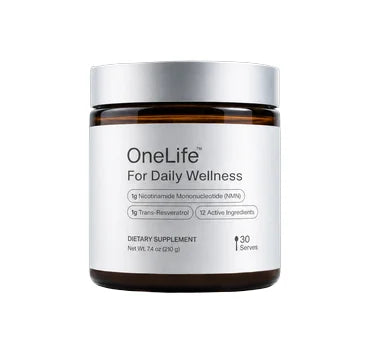
OneLife™
OneLife™
OneLife™
© 2026 FON Health AU Pty Ltd


Please select your shipping country.
Buy from the country of your choice. Remember that we can only ship your order to addresses location in the chosen country.

 Ships in 24h
"EXCELLENT"
 rated 4.8/5 on


