

For Today & Tomorrow
The Complete System
For Performance & Longevity


 Shop
Shop
 Learn
Learn


Editorial Team
Want To Jump Ahead?
Lock in Limited Time OfferThe message has been drilled into gym culture for years: drink protein immediately after training, or you have wasted the session.
It is a powerful idea because it creates urgency. It also sells a lot of shakes. But the science is far less panicked.
The “anabolic window” is real in one sense: after resistance training, your muscles become more responsive to amino acids, the building blocks of protein. What is not supported is the idea that this window is a tiny 30-minute countdown where your gains vanish if you miss it.
The better question is not whether protein should be taken before or after training. It is whether your body has enough high-quality protein available across the day to repair, adapt, and build.
That sounds less dramatic than the locker-room myth. It is also closer to what the research actually says.
The classic gym rule says you have about 30 minutes after training to get protein in. Miss it, and your muscles supposedly lose their chance to grow. That idea is too neat.
In their 2013 review, Alan Aragon and Brad Schoenfeld examined the post-exercise “anabolic window” and concluded that its importance depends on the bigger nutritional context: when you last ate, what you ate, how much protein you have consumed across the day, and whether you trained fasted or fed. Their point was not that timing is useless. It was that the window was not the rigid one-hour emergency people were sold.
For someone who ate a protein-rich meal a couple of hours before training, amino acids are still being digested and absorbed during the workout and early recovery period. In that scenario, the body is not sitting empty, waiting desperately for a shake.
For someone who trains first thing in the morning on coffee or finishes a session after six hours without food, the situation changes. Post-workout protein becomes more useful because there was no recent protein meal doing the job in the background.
That distinction matters. Most people do not need protein panic. They need protein consistency.
“Current evidence does not appear to support the claim that immediate ≤1 hour consumption of protein pre- and/or post-workout significantly enhances strength- or hypertrophic-related adaptations.”
— Schoenfeld, Aragon and Krieger, 2013
That line comes from a meta-analysis, not a motivational poster, and it should make every serious gym-goer rethink the stopwatch approach.
The pre-versus-post debate is often framed like a fight. One side says pre-workout protein primes the body. The other says post-workout protein is the golden recovery move.
The evidence points to a less clickable answer: either can work.
What matters is whether amino acids are available around training and whether total daily protein is high enough. A protein-rich meal before training can still support the recovery period after training. A post-workout serve can be equally useful, especially if you trained fasted or your next meal is hours away.
The body is not checking whether your protein landed before or after the final rep. It is responding to training, amino acid availability, total intake, and the pattern of feeding across the day. Here's an example.
A 32-year-old woman trains at 6:30 a.m. before work. She has coffee, lifts for 50 minutes, then rushes into meetings and does not eat until 11 a.m. For her, a post-workout protein serve makes sense. It closes a long overnight-plus-training gap and gives her body amino acids when she otherwise would not eat.
Now compare that with a man who eats eggs and Greek yoghurt at 8 a.m., trains at 10 a.m., and has lunch at midday. He does not need to panic if he forgets a shake in the car. His pre-workout meal and lunch already cover the training window.
Same science. Different day. Different answer. That is why blanket rules fail.
If there is one idea to take from the research, it is this: timing can help, but it does not outrank total daily protein.
In the 2013 meta-analysis “The effect of protein timing on muscle strength and hypertrophy”, Brad Schoenfeld, Alan Aragon and James Krieger reviewed the available controlled trials on protein timing. A simple analysis suggested a small hypertrophy benefit, but when the researchers controlled for other factors, especially total protein intake, protein timing itself did not significantly improve strength or muscle growth.
People who time protein well often also eat more protein overall. Once that is accounted for, the magic of timing becomes much less magical.
The International Society of Sports Nutrition’s 2017 position stand, led by Jäger and colleagues, recommends that many exercising individuals consume roughly 1.4 to 2.0 grams of protein per kilogram of body weight per day to support training adaptation.
For a 70 kg active person, that is about 98 to 140 grams per day. For a 90 kg active person, it is about 126 to 180 grams per day. Those numbers are where the real work begins.
It is easy to obsess over a post-workout shake and still under-eat protein at breakfast, skip lunch, and rely on a giant dinner to catch up. That pattern may hit a number on paper, but it is not the most practical way to support recovery through the day.
The smarter move is to build a daily rhythm: protein at breakfast, protein at lunch, protein near training when needed, and protein at dinner.
No panic. No stopwatch. Just repeatable nutrition.
One of the clearest examples comes from Areta, Burke, Ross and colleagues in 2013, published in The Journal of Physiology.
The researchers studied 24 healthy trained men after a bout of resistance exercise. Each participant consumed 80 grams of whey protein over 12 hours, but the pattern differed between groups: 10 grams every 1.5 hours, 20 grams every 3 hours, or 40 grams every 6 hours.
The result was not “more at once is always better.” The 20-gram dose every three hours produced a greater muscle protein synthesis response than the smaller, more frequent doses or the larger, less frequent boluses. In the study abstract, the intermediate pattern produced higher myofibrillar protein synthesis than the other patterns, with reported differences of 31–48 percent.
This does not mean every person must eat exactly 20 grams of whey every three hours. That would be taking a controlled lab protocol and pretending it is a lifestyle rule.
What it does show is more practical: distribution matters. Your body appears to respond well to repeated, high-quality protein doses across the day rather than one huge protein dump.
For most active adults, that means building meals around protein rather than leaving the entire job to one shake. But this is also where convenience becomes the difference between knowing the science and actually following it.
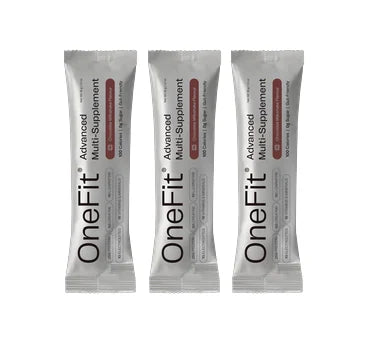
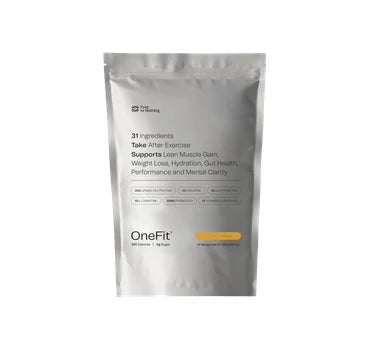
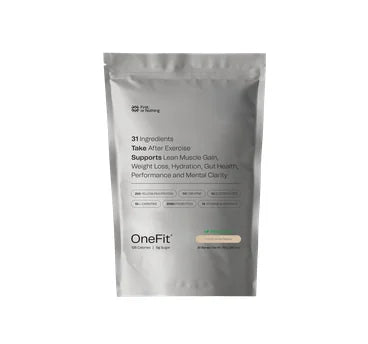
A product like OneFit® fits best here as a simple way to keep protein more consistent when meals are messy, training runs are late, or your schedule makes perfect food timing unrealistic.
The best use case is simple. Use OneFit® when it helps you hit your daily protein target or cover a long gap around training. Do not use it because you are scared the anabolic window is closing.
The biggest myth is that missing protein immediately after training means you have somehow wasted the workout. That is not how muscle recovery works. If you have eaten enough quality protein before and after training throughout the day, one missed shake is unlikely to affect your results.
Another common mistake is assuming post-workout protein is always superior to pre-workout protein. In reality, a protein-rich meal before training can still supply amino acids during and after your session. Post-workout protein becomes more important when you trained fasted, have not eaten for hours, or know your next proper meal is still a long way off.
Then there is the overcorrection: the claim that the anabolic window is completely fake. That is not quite right either. Resistance training does make muscle more responsive to protein, but the window is wider and more flexible than the old 30-minute rule suggested.
More protein in one sitting is not always better, either. Areta and colleagues showed that, in their 12-hour recovery model, a moderate protein dose repeated throughout the day outperformed larger, less frequent servings. The lesson is not to follow that protocol exactly, but to avoid dumping most of your protein into one meal and hoping it covers everything.
And finally, timing cannot rescue a low-protein diet. A perfectly timed 25-gram shake will not make up for routinely under-eating protein across the rest of the day. For most people, the smarter target is simple: enough total protein, spread sensibly, with a quality serve near training when it fits your schedule.

For Performance
$3.30/day
$297/90 DAYS
The anabolic window was never a 30-minute trapdoor. It is better understood as a flexible recovery period shaped by your last meal, your next meal, your training, and your total protein intake.
For most people, the winning strategy is not dramatic: eat enough protein, spread it across the day, and use a quality serve around training when it genuinely helps your schedule.
OneFit ® makes that strategy easier to follow. Not because it “hacks” recovery or replaces proper meals, but because it gives you a practical protein option when work runs late, training shifts, or your next meal is still hours away.
Get our weekly deep-dive into performance science, research summaries, and elite training protocols.
Join 45,000+ high-performers. Unsubscribe anytime.
Every batch of First or Nothing products is independently tested for heavy metals, purity, and dosage accuracy to ensure safety and quality.

First or Nothing is independently tested for heavy metals, purity, and dosage accuracy.
 OneFit®
OneFit®
OneFit®
OneFit®
OneFit®
OneFit®
OneFit®
OneFit®
OneFit®
OneFit®
OneFit®
First or Nothing is independently tested for heavy metals, purity, and dosage accuracy.
OneLife™
OneLife™
OneLife™
© 2026 FON Health AU Pty Ltd


Please select your shipping country.
Buy from the country of your choice. Remember that we can only ship your order to addresses location in the chosen country.

 Ships in 24h
"EXCELLENT"
 rated 4.8/5 on


