
For Today & Tomorrow
The Complete System
For Performance & Longevity


 Shop
Shop
 Learn
Learn


Editorial Team
Want To Jump Ahead?
Lock in Limited Time OfferThat is the blind spot in most recovery advice. People are told to think about protein, soreness, and muscle growth. But for a lot of active adults, the first thing to break down is not muscle. It is the tissue around it: the knee that stays irritated, the Achilles that never quite settles, the shoulder that turns pressing day into a negotiation.
That is why the collagen-versus-whey debate matters more than it sounds. Whey became the default answer because muscle has dominated the conversation for years. But if the real reason training keeps stalling is joint irritation, tendon overload, and connective tissue fatigue, then whey is solving the wrong problem.
That is where collagen starts to win.
Muscle adapts quickly. Tendons and ligaments do not.
That difference matters more than most people realise. You can get stronger in a matter of weeks, but the tissues that anchor, stabilise and transfer force usually take longer to adapt. When that timeline gets out of sync, training starts to feel expensive. You may still be progressing on paper, but your body no longer feels like it is absorbing the workload cleanly.
Collagen is the structural protein at the heart of that conversation. It is rich in amino acids like glycine and proline, which are heavily represented in connective tissue. That is why collagen research tends to focus less on flashy “muscle pump” promises and more on tendons, ligaments, joint comfort and recovery capacity.
This is where whey starts to look limited. If you only ask which protein is best at triggering muscle protein synthesis, you are asking a narrow question. A lot of active adults are asking a different one: what helps the body feel robust enough to keep training hard, week after week, without the same joints and soft tissues taking the hit every time?
That is where collagen starts to make more sense.
The cleanest real-world example is still Clark et al. (2008). In that 24-week randomised, placebo-controlled trial, 147 varsity and club athletes with activity-related joint pain were assigned to 10 grams of collagen hydrolysate or placebo each day. When the data were analysed, the collagen group improved across several pain measures, including pain when walking, standing, lifting, carrying objects and being assessed at rest. In the subgroup with knee arthralgia, the advantage became even more pronounced.
In Clark et al. (2008), athletes taking 10 g of collagen hydrolysate daily for 24 weeks improved on multiple joint-pain measures versus placebo, with an even clearer effect in the knee-pain subgroup.
That is not the kind of result that makes a flashy gym ad. It is better than that. It is the kind of result that explains why some people can keep their training rhythm, and others start modifying sessions around whatever is bothering them this month.
Another important paper is Shaw et al. (2017). In that crossover study, eight healthy men consumed vitamin C–enriched gelatin before intermittent exercise. The group taking 15 grams showed roughly double the blood marker associated with collagen synthesis, which is one reason this study is constantly cited when people talk about collagen timing around training.
More recently, Aussieker et al. (2024) looked at 15 recreationally active men recovering from lower-body resistance exercise. The practical takeaway was simple: adding just 5 grams of collagen to 25 grams of whey prevented the post-exercise drop in plasma glycine availability that occurred with whey alone. That does not prove collagen is a magic recovery bullet, but it does support the idea that collagen is feeding a different side of the recovery equation.
Yes, in direct hypertrophy comparisons, whey is still the stronger anabolic protein. But that is also exactly why collagen wins this argument. The article is not about which protein is better at spiking muscle protein synthesis in a lab frame. It is about which one better addresses the recovery bottleneck most active people actually feel in their bodies.
On that question, collagen has a stronger case
This is the part that supplement ads usually miss.
Most people do not lose momentum because they forgot how to train. They lose momentum because soreness stops feeling productive and starts feeling structural. A heavy lower-body week turns into a stiff Achilles. A return to upper-body volume turns into an irritated elbow. Nothing is dramatic enough to count as an injury, but it is enough to cut volume, skip sessions, and train around pain.
That is a recovery problem, not a motivation problem.
And this is where collagen beats whey in practice. Whey may be better at serving one narrow goal, but collagen speaks more directly to the thing that actually knocks people off track: the body’s ability to tolerate repeated loading over time.
The broader literature points in that direction. A 2024 systematic review and meta-analysis in Sports Medicine found that long-term collagen peptide supplementation alongside training appeared to offer advantages for fat-free mass, tendon morphology, maximal strength, and 48-hour recovery in reactive strength.
That is not a reason to oversell collagen. It is a reason to stop underselling it.
Because in the real world, the best supplement is not the one that wins the most technical argument. It is the one that helps you train hard without the same tissue complaints dragging behind you every week.
That is why collagen wins here. Not because it outperforms whey at everything, but because it performs better against the problem this article is actually about.
A plain collagen powder can still be useful. The problem is that most people do not live on a single-ingredient supplement stack.
They are trying to recover well, keep protein high enough, stay hydrated, get creatine in, avoid gut blowback, remember their micronutrients and do all of that while juggling work, travel and real life. That is why so many supplement routines look impressive for two weeks and then end up half-used at the back of a cupboard.
This is where OneFit stands out.
First or Nothing is not positioning OneFit as just another collagen product. It is built around a more useful idea: if connective tissue is one of the biggest weak links in recovery, then collagen should not be buried as an afterthought. It should be part of a daily system designed to help the body hold up under repeated training stress.
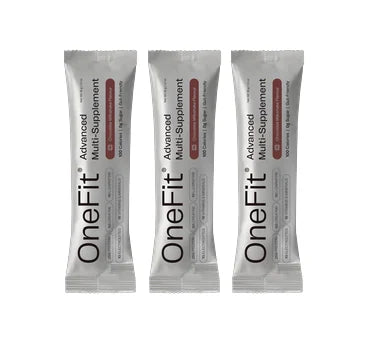
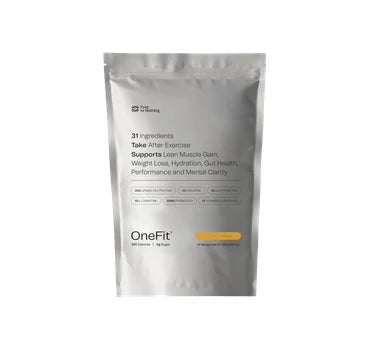
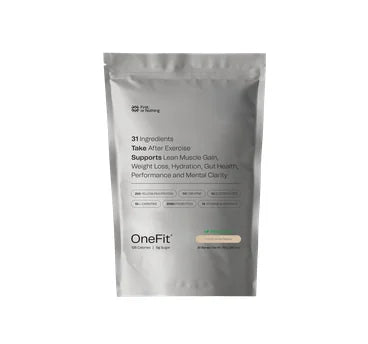
That is what makes OneFit more compelling than a cheap collagen or whey tub. Yes, it uses collagen protein. But it does more than dump collagen into a formula and call it innovation. It combines 25g hydrolysed collagen protein, 5g creatine monohydrate, 1000mg Electrolytes, 1000mg L-Carnitine, 20bn CFU Probiotics, Methylated B Vitamins, Minerals and Gut Support into one daily serve, so recovery is supported from more than one angle.
The point is not just that OneFit contains collagen. The point is that it is built around what collagen is actually good at: supporting the structures that help you keep showing up.
A bargain-bin tub gives you one isolated input. OneFit turns collagen into a complete recovery habit.
That is the real distinction. Not another powder. Not another half-finished stack. A simpler, smarter way to support durability every day you train.

For Performance
$3.30/day
$297/90 DAYS
If your recovery cabinet already looks like a chemistry bench, that kind of simplicity is not a minor benefit. It is often the difference between a supplement plan you admire and one you actually stick to.
Whey may still own the narrow muscle-protein-synthesis argument. But that is not the only argument worth having. If the real bottleneck is how your joints, tendons and connective tissue are coping with training, collagen becomes far more relevant — and for many people, far more valuable. That is the gap this category has missed for years, and it is exactly why a smarter recovery setup makes more sense than another one-note shake.
Get our weekly deep-dive into performance science, research summaries, and elite training protocols.
Join 45,000+ high-performers. Unsubscribe anytime.
Every batch of First or Nothing products is independently tested for heavy metals, purity, and dosage accuracy to ensure safety and quality.

First or Nothing is independently tested for heavy metals, purity, and dosage accuracy.
 OneFit®
OneFit®
OneFit®
OneFit®
OneFit®
OneFit®
OneFit®
OneFit®
OneFit®
OneFit®
OneFit®
First or Nothing is independently tested for heavy metals, purity, and dosage accuracy.
OneLife™
OneLife™
OneLife™
© 2026 FON Health AU Pty Ltd


Please select your shipping country.
Buy from the country of your choice. Remember that we can only ship your order to addresses location in the chosen country.

 Ships in 24h
"EXCELLENT"
 rated 4.8/5 on


