

For Today & Tomorrow
The Complete System
For Performance & Longevity


 Shop
Shop
 Learn
Learn


Editorial Team
Want To Jump Ahead?
Lock in Limited Time OfferThe answer isn't what you see in the mirror. In fact, if you've only skipped exercise for a week or two, your reflection may look almost exactly the same. But beneath the surface, your body has already started adapting to life with less movement.
Long before your jeans fit differently or the number on the scales begins to climb, your muscles become less responsive to insulin, your cardiovascular fitness starts to decline, and your metabolism begins adjusting to a lower level of activity. These changes don't happen overnight, but they're measurable, and scientists have been documenting them for decades.
The good news is that your body is remarkably adaptable. The same biological systems that respond when you stop exercising also respond when you start moving again. Understanding what happens during a break from exercise can help you stay consistent, recover with confidence after time away, and realise that while fitness can fade, it can also be rebuilt.
A common belief is that stopping exercise causes your metabolism to "crash." That's an oversimplification.
Resting metabolic rate doesn't suddenly plummet because you skipped a few workouts. What usually changes first is your total daily energy expenditure. If you're exercising less, you're naturally burning fewer calories throughout the day. Over time, that reduced movement can also contribute to a gradual loss of lean muscle mass, which plays an important role in how many calories your body uses at rest.
The changes go deeper than calorie burn.
Muscles are one of the body's biggest consumers of glucose and fat. When they aren't challenged regularly, they become less efficient at using both as fuel. Researchers have also shown that inactivity reduces mitochondrial function, the performance of the tiny structures inside your cells that convert nutrients into usable energy.
That helps explain why people often report feeling sluggish after weeks of inactivity. It's not simply that they're "out of shape." Their muscles have become less metabolically active because they're no longer receiving the stimulus that regular exercise provides.
Frank Booth and colleagues made this point in their landmark 2012 review, Lack of Exercise Is a Major Cause of Chronic Diseases, arguing that physical inactivity should be viewed as an independent health risk rather than merely the absence of fitness.
Perhaps the most surprising effect of stopping exercise isn't weight gain or muscle loss. It's what happens to your body's ability to manage blood sugar.
Every time your muscles contract during exercise, they pull glucose out of the bloodstream and use it for energy. Regular activity also makes those muscles more responsive to insulin, allowing glucose to move into cells more efficiently.
When that stimulus disappears, insulin sensitivity begins to decline.
One of the clearest demonstrations came from researchers at the University of Copenhagen. In a study led by Krogh-Madsen et al. (2010), healthy young adults reduced their daily activity from roughly 10,000 steps to about 1,500 steps for two weeks.
By the end of the study, participants had developed lower insulin sensitivity, accumulated more abdominal fat, and experienced declines in cardiovascular fitness—even though they were young, healthy and had only been inactive for a short period.
"Reducing daily ambulatory activity for just two weeks induced marked reductions in insulin sensitivity and cardiorespiratory fitness in healthy young adults." — Krogh-Madsen et al., Journal of Applied Physiology (2010)
The findings serve as a reminder that movement isn't just about burning calories. It's one of the body's most powerful tools for maintaining healthy metabolism.
Exercise trains far more than your muscles.
With every brisk walk, strength session, or bike ride, your heart becomes more efficient at pumping blood, while your blood vessels become better at expanding and delivering oxygen throughout the body.
Those adaptations don't disappear overnight, but they don't last forever either.
Sports scientists use the term detraining to describe what happens when regular exercise stops. In their widely cited review published in Sports Medicine, Mujika and Padilla (2000) found that aerobic fitness, measured as VO₂ max, can begin declining within two to four weeks of inactivity.
Earlier work by Coyle et al. (1984) showed that one reason for this decline is a reduction in blood volume. As blood volume falls, the heart has less blood to pump with each beat, making exercise feel harder than it did before.
This is why returning to the gym after a holiday or illness often feels surprisingly difficult. Your muscles may still remember the movements, but your cardiovascular system has already begun adjusting to doing less.
Fortunately, these changes are largely reversible. Consistent training allows blood volume, cardiovascular fitness, and endurance to recover over time.
Many people assume that a few weeks away from exercise wipes out years of hard work. That's simply not what the evidence shows.
Cardiovascular fitness tends to decline faster than strength because the heart and circulatory system adapt quickly to changing demands. Muscle strength, however, often remains for longer because the nervous system retains many of the adaptations that improve force production.
Even when muscle size decreases during periods of inactivity, researchers believe previous training creates a lasting advantage often referred to as muscle memory. Once training resumes, previously active muscles generally regain size and strength faster than muscles being trained for the first time.
That doesn't mean extended inactivity has no consequences. Long breaks can still reduce muscle mass, lower endurance, and make everyday activities feel more challenging. But it does mean that missing a few weeks isn't the end of your progress.
The body is constantly adapting to whatever you ask of it.
If you ask it to climb stairs, lift weights, and go for walks, it builds the systems needed to support those activities.
If you ask it to spend most of the day sitting, it gradually becomes better at doing that instead.
The biggest lesson from decades of exercise research isn't that you should never miss a workout.
Life gets busy. Holidays happen. Injuries happen.
What matters most is avoiding long stretches where inactivity becomes your new normal.
Research consistently shows that regular movement, whether it's resistance training, cycling, swimming, gardening, or simply walking most days of the week, supports healthier blood sugar regulation, cardiovascular function, muscle maintenance, and long-term metabolic health.
Perfection isn't required. Consistency is.
Exercise will always be the foundation of good health. It's one of the most effective ways to support your heart, muscles, metabolism and long-term wellbeing, and no supplement can replace the benefits of regular movement, quality sleep and a balanced diet.
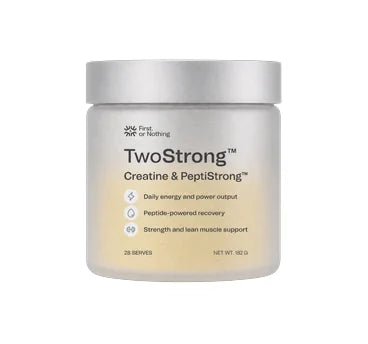
That said, staying consistent isn't always easy. Busy schedules, travel, family commitments, and demanding training blocks can all make it harder to recover well or meet your daily nutritional needs. That's where the right nutritional support can complement, not replace, a healthy routine.
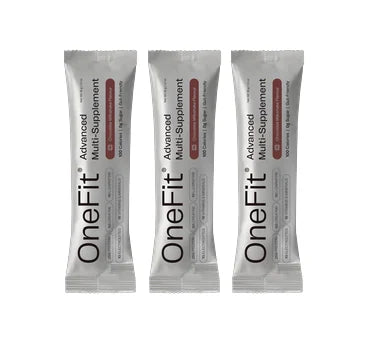
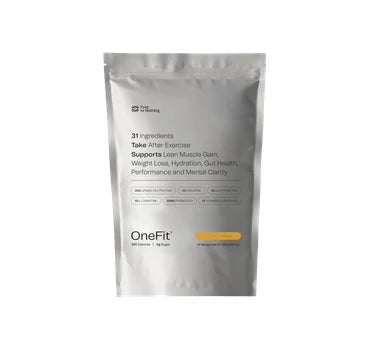
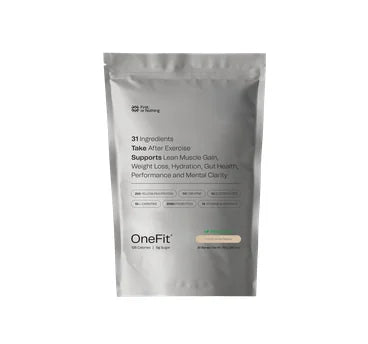
For people who train consistently and want to support recovery, hydration, and daily performance, OneFit® brings together 31 clinically-dosed ingredients in one convenient daily serving.
Whether you're lifting weights, running, playing sport or simply trying to stay active throughout the week, good recovery is what allows you to keep showing up. Supporting your body with the right nutrition can make it easier to maintain momentum, so you're ready for your next workout instead of constantly recovering from your last.

For Performance
$3.30/day
$297/90 DAYS
Taking a break from exercise doesn't erase years of progress, but it does remind us how responsive the human body is. Within days or weeks of becoming less active, changes in metabolism, blood sugar regulation and cardiovascular fitness can begin, often long before they're reflected in the mirror.
The same principle works in your favour when you start moving again. Every walk, strength session, and workout gives your body another reason to rebuild muscle, improve fitness, and restore the metabolic adaptations that support long-term health.
While no supplement can replace regular exercise or a balanced diet, the right nutritional support can help you stay consistent with your routine. OneFit® is formulated with protein, creatine, electrolytes, probiotics, and key nutrients to support recovery, hydration, and everyday performance, helping you get more out of every training session as you work towards your health and fitness goals.
Get our weekly deep-dive into performance science, research summaries, and elite training protocols.
Join 45,000+ high-performers. Unsubscribe anytime.
Every batch of First or Nothing products is independently tested for heavy metals, purity, and dosage accuracy to ensure safety and quality.

First or Nothing is independently tested for heavy metals, purity, and dosage accuracy.
 OneFit®
OneFit®
OneFit®
OneFit®
OneFit®
OneFit®
OneFit®
OneFit®
OneFit®
OneFit®
OneFit®
First or Nothing is independently tested for heavy metals, purity, and dosage accuracy.
OneLife™
OneLife™
OneLife™
© 2026 FON Health AU Pty Ltd


Please select your shipping country.
Buy from the country of your choice. Remember that we can only ship your order to addresses location in the chosen country.

 Ships in 24h
"EXCELLENT"
 rated 4.8/5 on


