
For Today & Tomorrow
The Complete System
For Performance & Longevity


 Shop
Shop
 Learn
Learn


Editorial Team
Want To Jump Ahead?
Lock in Limited Time OfferHeart rate variability has moved from sports science labs and research settings onto Apple Watches, Garmin devices, WHOOP straps, and Oura Rings.
But what does HRV actually tell you?
In simple terms, heart rate variability measures the small differences in timing between your heartbeats. Those changes are influenced by your autonomic nervous system, which helps your body respond to stress, exercise, rest and recovery.
That makes HRV interesting because it isn't simply telling you how fast your heart is beating. It can provide a glimpse into how your body is responding to everything going on around you.
But there's an important catch: HRV isn't a score you need to constantly increase, and there isn't one "perfect" number for everyone.
“HRV isn't a score to chase. It's a window into how your body is responding to the life you're living.”
Imagine your resting heart rate is 60 beats per minute. You might assume your heart beats exactly once every second. It doesn't.
The time between individual heartbeats constantly changes by tiny amounts. One interval might be slightly shorter, while the next is slightly longer. That variation is HRV.
Your autonomic nervous system is largely responsible for these changes. It includes the sympathetic nervous system, which helps your body respond to demands, and the parasympathetic nervous system, which is associated with rest and recovery.
When you're exercising, stressed, or excited, your body responds differently than when you're sleeping or relaxing. Your heart adjusts accordingly. That's why a perfectly regular heartbeat isn't necessarily the goal. A healthy nervous system needs to be able to adapt.
The science behind HRV isn't new. What's new is how easy it has become to measure. Wearable technology has turned a measurement that once required specialist equipment into something people can monitor from their wrist or finger, and the timing makes sense.
People aren't just interested in how many calories they burned anymore. They're increasingly interested in recovery.
HRV can provide clues, but it can't answer those questions on its own.
That's an important distinction. A wearable doesn't know your entire life. It sees physiological data and looks for patterns. You still have to interpret those patterns.
Think about your body as having a stress bucket. A hard workout adds water, and a late night or stressful week at work can add more. So can travel, alcohol, illness, or simply not giving yourself enough time to recover.
HRV may change as that overall physiological load changes. This is why a person can see their HRV fall after an intense training session, while another person sees a similar drop after several nights of poor sleep.
The trigger isn't necessarily the same. The body's response to accumulated stress is what matters. And that's one reason HRV can be useful: it may reveal that your body is dealing with more strain than you consciously realise.
However, a single low HRV reading doesn't tell you what caused it. That's why looking at patterns over time is generally more useful than panicking over one unusual morning.
This is probably the most important thing to understand before you start comparing your number with friends, athletes, or strangers online.
There is no universal HRV score that everyone should aim for. Your HRV can be influenced by factors including age, genetics, fitness, sleep, stress, illness, and measurement conditions.
So if someone posts an HRV of 100 and yours is 40, that doesn't automatically mean they're healthier than you. Your personal baseline is much more useful.
Think of HRV like your normal body temperature. The important question isn't whether your number matches someone else's. It's whether your number has changed significantly from your usual pattern.
This is where the research becomes particularly interesting.
A 2024 systematic review and meta-analysis, Effects of Exercise Training on Heart Rate Variability in Healthy Adults, looked at 16 randomised controlled trials involving 623 healthy adults. The researchers found that exercise training improved several HRV measures, including SDNN and RMSSD, measures commonly used to assess changes in autonomic regulation. The authors noted that the effects could vary according to factors such as age, sex and exercise type.
Another 2024 systematic review and meta-analysis, Beneficial impacts of physical activity on heart rate variability, examining physical activity also found beneficial effects on HRV.
In other words, exercise isn't simply about improving your muscles and cardiovascular fitness. Regular physical activity can also influence the way your autonomic nervous system responds. But there's a twist.
A hard workout can temporarily lower your HRV. That doesn't necessarily mean exercise is hurting you. It may simply mean your body is responding to the stress of training and hasn't finished recovering yet.
That's why the number you see immediately after a demanding training block isn't the same thing as your long-term response to exercise.
This is where wearable technology can become both useful and confusing. Imagine waking up feeling good, but your watch says your HRV is below baseline.
Should you cancel your workout? Not automatically.
Research into HRV-guided training is promising, but it isn't a magic formula. A systematic review and meta-analysis by Manresa-Rocamora A et al. Heart Rate Variability-Guided Training for Enhancing Cardiac-Vagal Modulation, Aerobic Fitness, and Endurance Performance, found that HRV-guided training improved vagal-related HRV measures compared with predetermined training, while improvements in aerobic fitness and endurance performance were smaller and not statistically significant.
Another meta-analysis of endurance training, Bellenger CR, et al. Monitoring and adapting endurance training on the basis of heart rate variability monitored by wearable technologies, found that HRV-guided approaches improved some submaximal physiological measures, but did not produce a significant improvement in performance or VO₂peak.
The practical takeaway?
Use HRV as information, not instructions.
If your HRV is slightly lower but you feel energetic, slept well, and aren't unusually sore, you may still be fine to train.
If your HRV has been unusually low for several days and you're also exhausted, sleeping poorly, or struggling during workouts, reducing your training load may make more sense.
Your wearable gives you data. You provide the context.
Mostly, but don't treat the number as laboratory-grade truth.
Wearable devices use different sensors, algorithms, and measurement periods. Some measure during sleep, while others collect readings at specific times.
Research has found that wearable and portable devices can provide useful HRV measurements, particularly under resting conditions, but measurement accuracy can vary depending on the device, metric, and circumstances.
A 2024 systematic review Lu L, et al. Uncertainties in the Analysis of Heart Rate Variability, also highlighted the broader uncertainties involved in HRV analysis, including differences in measurement and interpretation.
This is why it's better to stick with one device and watch your own trend rather than comparing your Apple Watch number with someone's WHOOP score. Different devices can tell different versions of the same story.
A low HRV doesn't automatically mean you're unhealthy. It can change because of everyday factors such as poor or shortened sleep, hard training, psychological stress, alcohol, illness, travel, disrupted routines, dehydration, and changes in your normal schedule
This is why obsessing over one low reading can create more stress, the exact thing you're trying to understand. Instead, look for persistent changes.
If your HRV remains unusually low alongside symptoms such as ongoing fatigue, poor sleep, reduced exercise tolerance, or feeling unwell, don't rely on your wearable to work out what's wrong. Speak with an appropriate healthcare professional.
HRV can be useful information. It isn't a diagnosis.
Start with the basics: prioritise consistent sleep, exercise regularly, but give your body time to recover, eat a balanced diet, stay hydrated, manage ongoing stress, be mindful of alcohol, and don't underestimate the value of simply taking a break.
The evidence around exercise is particularly encouraging. Effects of Exercise Training on Heart Rate Variability in Healthy Adults: A 2024 meta-analysis of randomised trials in healthy adults found improvements in several HRV measures following exercise training.
That doesn't mean you need to chase a particular HRV number. It means the habits that support overall health can also support the systems behind HRV.
HRV isn't something a supplement should be marketed as "fixing". Your recovery is built primarily through lifestyle: sleep, nutrition, movement, stress management and adequate recovery.
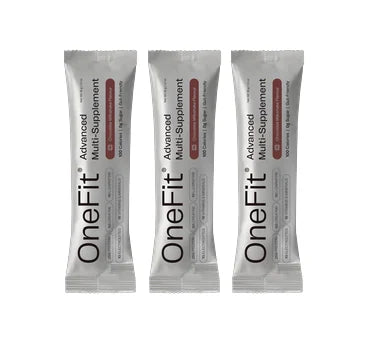
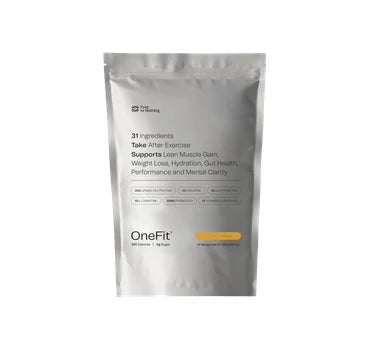
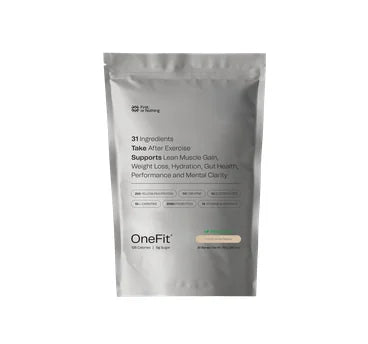
For people looking for a convenient way to support their daily nutrition and active lifestyle, First or Nothing OneFit® combines protein, creatine, electrolytes, L-carnitine, vitamins, minerals, and gut support in one daily formula. It can sit alongside the fundamentals of recovery and wellbeing, including regular movement, balanced nutrition, adequate sleep and rest.

For Performance
$3.30/day
$297/90 DAYS
Your smartwatch might tell you that your HRV dropped last night. But it can't tell you whether you trained too hard, slept badly, had a stressful day, drank more than usual, or simply had an unusual night. That's your job.
HRV is most useful when you stop treating it like a score and start treating it like a signal.
Don't ask: "How do I get the highest HRV?" Ask: "What might my body be telling me today?"
Sometimes the answer will be to train. Sometimes it will be to recover, and sometimes the smartest thing you can do is close the app, stop checking the number, and get on with your day.
Your wearable can measure the pattern. You still have to live the life behind it.
Get our weekly deep-dive into performance science, research summaries, and elite training protocols.
Join 45,000+ high-performers. Unsubscribe anytime.
Every batch of First or Nothing products is independently tested for heavy metals, purity, and dosage accuracy to ensure safety and quality.

First or Nothing is independently tested for heavy metals, purity, and dosage accuracy.
 OneFit®
OneFit®
OneFit®
OneFit®
OneFit®
OneFit®
OneFit®
OneFit®
OneFit®
OneFit®
OneFit®
First or Nothing is independently tested for heavy metals, purity, and dosage accuracy.
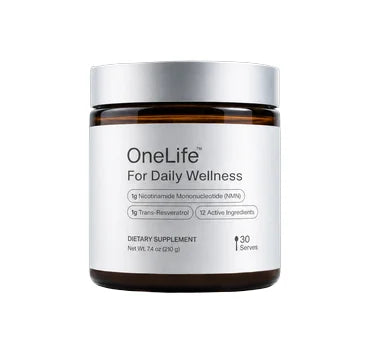
OneLife™
OneLife™
OneLife™
© 2026 FON Health AU Pty Ltd


Please select your shipping country.
Buy from the country of your choice. Remember that we can only ship your order to addresses location in the chosen country.

 Ships in 24h
"EXCELLENT"
 rated 4.8/5 on


