

For Today & Tomorrow
The Complete System
For Performance & Longevity


 Shop
Shop
 Learn
Learn


Editorial Team
Want To Jump Ahead?
Lock in Limited Time OfferFor decades, doctors have relied on familiar measurements like blood pressure, cholesterol, and body weight to assess a person's health. But another test has quietly earned the attention of researchers, geriatricians, and longevity experts around the world, and it takes less than five seconds to perform.
All you have to do is squeeze. Grip strength, measured with a simple handheld device, has emerged as one of the strongest physical indicators of healthy ageing. Study after study has found that people with lower grip strength are more likely to experience frailty, disability, cardiovascular disease, cognitive decline and earlier death than those who maintain their strength as they age.
That doesn't mean stronger hands magically add years to your life. Rather, grip strength offers something arguably more valuable: a glimpse into how well your body is ageing beneath the surface.
Grip strength is considered one of the most useful biomarkers of healthy ageing because it reflects overall muscle function, nervous system health and physical resilience. Research consistently links lower grip strength with a higher risk of frailty, disability, cardiovascular disease and premature death. However, it is a marker of overall health, not a direct cause of longevity.
Grip strength measures the amount of force your hand and forearm muscles can generate when squeezing an object. Healthcare professionals usually measure it using a handheld device called a dynamometer.
Although the test focuses on your hand, it tells a much bigger story.
Producing a strong grip requires healthy muscles, functioning nerves, coordinated movement and sufficient energy production throughout the body. If any part of that system begins to decline, grip strength often declines too.
This is why hospitals, rehabilitation centres and geriatric clinics increasingly use grip strength as part of routine assessments for older adults and people recovering from illness or surgery. It's quick, inexpensive and surprisingly informative.
One of the biggest misconceptions is that grip strength itself determines how long you'll live.
Grip strength is better understood as a biomarker, a measurable sign that reflects what's happening elsewhere in the body.
Think of it like the battery health indicator on your phone. It doesn't tell you everything about the device, but it provides a remarkably accurate snapshot of how well the entire system is functioning.
A weaker grip may reflect several age-related changes occurring at the same time, including:
Because these changes develop gradually, grip strength can sometimes highlight declining physical function before people notice obvious symptoms.
The muscles in your hands aren't unique; they're simply easy to measure.
Every time you squeeze something, your brain sends signals through the spinal cord and peripheral nerves to activate dozens of muscles in your forearm and hand. Those muscles rely on healthy nerve pathways, efficient energy production, adequate blood flow, and well-functioning muscle fibres.
As we age, these systems often begin to decline together.
Muscle fibres shrink. Nerve communication becomes less efficient. Physical activity often decreases. Chronic inflammation can gradually increase. Even the body's ability to repair muscle after exercise becomes less effective.
Your grip doesn't cause these changes; it reflects them. That's why researchers view grip strength as a convenient window into whole-body function rather than simply hand strength.
The excitement surrounding grip strength isn't based on a single headline-grabbing study. It's supported by decades of research involving hundreds of thousands of participants worldwide.
In the PURE Study, grip strength was a stronger predictor of all-cause and cardiovascular mortality than systolic blood pressure.
— Leong DP, et al. The Lancet. 2015.
One of the most influential was the Prospective Urban Rural Epidemiology (PURE) Study, which followed more than 140,000 adults across 17 countries. Researchers found that people with lower grip strength had a significantly higher risk of dying from any cause, along with increased risks of heart attack, stroke and cardiovascular disease.
One finding surprised many researchers: in some analyses, grip strength predicted these outcomes more effectively than blood pressure.
That doesn't mean blood pressure suddenly became unimportant. Instead, it highlighted just how much information muscle strength may provide about overall health.
More recent systematic reviews and umbrella reviews have reinforced these findings, consistently linking stronger grip strength with lower rates of frailty, falls, disability and hospitalisation.
Researchers have also identified connections between grip strength and brain health. People with lower grip strength appear more likely to experience cognitive decline and dementia, although scientists believe both are driven by many of the same underlying biological processes rather than one directly causing the other.
Importantly, these studies show association, not causation. Having a stronger grip doesn't guarantee a longer life. Rather, people who maintain better overall health throughout life tend to preserve more muscle strength as they age.
For years, fitness conversations focused largely on appearance, losing weight, gaining muscle or changing body composition. Today, researchers increasingly recognise that strength may be even more important than muscle size.
Muscle is one of the body's most important organs for healthy ageing. It helps regulate blood sugar, supports metabolism, protects bones, improves balance and allows us to remain independent as we grow older.
Beginning in our 30s, adults gradually lose muscle mass and strength in a process known as sarcopenia. Without regular resistance training and adequate nutrition, this decline accelerates with age.
Losing strength isn't simply about finding it harder to open a jar. It can make climbing stairs more difficult, increase the risk of falls, slow recovery after illness, and reduce the ability to perform everyday activities independently.
Grip strength offers a simple snapshot of this broader picture. It doesn't capture every aspect of health, but it provides valuable insight into one of the body's most important protective systems.
|
Grip Strength Can Indicate |
Grip Strength Cannot Tell You |
|
Overall muscle function |
Exactly how long you'll live |
|
Risk of frailty |
Whether you have a specific disease |
|
Physical resilience |
Your exact biological age |
|
Functional decline |
Your cardiovascular fitness alone |
|
Recovery potential |
Your complete health picture |
The most important message is that grip strength should never be viewed in isolation.
Doctors consider it alongside physical activity, nutrition, body composition, medical history, and other clinical assessments to build a complete picture of someone's health.
The encouraging news is that grip strength isn't fixed. Like most aspects of fitness, it responds to consistent training.
Research shows that resistance exercise can improve grip strength across a wide range of age groups, including older adults. What's more, the gains often reflect improvements beyond the hands themselves. As people become stronger overall, grip strength tends to increase alongside leg strength, balance, and functional mobility.
That's why most experts don't recommend squeezing a hand gripper all day in the hope of living longer. Instead, they focus on building total-body strength.
You don't need specialised equipment to strengthen your grip. Many everyday exercises naturally challenge the muscles in your hands and forearms while also improving overall fitness.
Some of the most effective exercises include deadlifts, farmer's carries, pull-ups (or assisted pull-ups), rows, kettlebell carries, hanging from a pull-up bar, resistance band exercises, and even carrying heavy grocery bags.
These exercises force your hands to hold weight for extended periods, improving both grip endurance and overall muscular strength.
If your goal is healthy ageing rather than competitive strength, experts generally recommend performing resistance training at least two to three times per week, targeting all major muscle groups.
Exercise provides the stimulus for stronger muscles, but nutrition supplies the building blocks. Without enough protein, the body struggles to repair and maintain muscle tissue after exercise. This becomes increasingly important with age, as older adults experience what's known as anabolic resistance, meaning their muscles respond less efficiently to protein intake than they did in younger years.
Research consistently shows that adequate daily protein intake, spread across meals, supports muscle maintenance as we age.
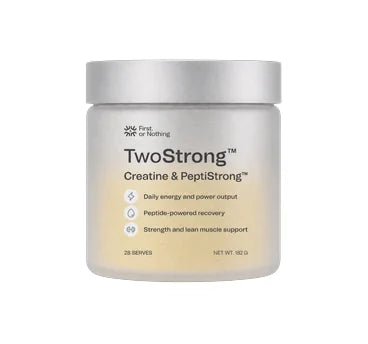
Creatine is another nutrient that has received growing scientific attention. Although often associated with athletes, creatine is one of the most extensively researched supplements for supporting muscle performance. Numerous systematic reviews have found that, when combined with resistance training, creatine supplementation can help improve strength and support gains in lean muscle mass, particularly in older adults.
It's important to note that creatine isn't a shortcut. The benefits are most consistently observed when it complements regular exercise and adequate nutrition, not when used in isolation.
Improving grip strength isn't about finding one magic ingredient. It's the result of consistent movement, progressive resistance training, sufficient recovery, and good nutrition.
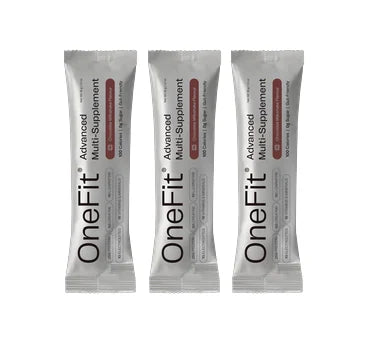
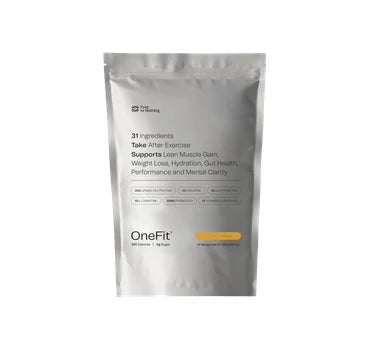
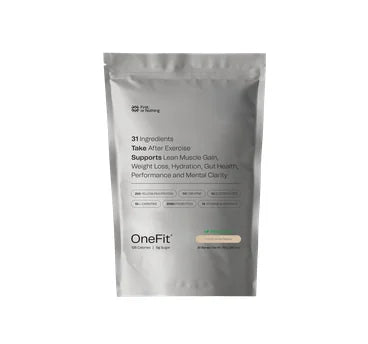
For people who already prioritise those habits, a product like OneFit® can be a convenient way to support their routine. It combines high-quality protein with creatine monohydrate in a single serving, alongside electrolytes, probiotics and other nutrients designed to complement an active lifestyle.
Importantly, no supplement replaces resistance training. Think of nutrition as supporting the work your muscles do, not replacing it.
If you're curious about your grip strength, many physiotherapy clinics, exercise physiologists and some gyms have hand dynamometers available.
While home grip trainers can help improve hand strength, they aren't reliable tools for measuring it accurately. Remember that one reading doesn't define your health. Grip strength varies with age, body size, injury history, and even temporary fatigue.
What's more useful is tracking changes over time. If your grip strength is improving alongside your overall fitness, it's often a positive sign that your training and nutrition are moving in the right direction.

For Performance
$3.30/day
$297/90 DAYS
Grip strength has become one of the most talked-about measurements in healthy ageing, not because strong hands are magical, but because they reflect something much deeper.
They offer a simple snapshot of muscle health, nervous system function and physical resilience.
The goal isn't to chase an impressive number on a dynamometer. It's to build and maintain the kind of strength that lets you lift your grandchildren, carry your shopping, recover from illness more easily and stay independent for decades to come.
Get our weekly deep-dive into performance science, research summaries, and elite training protocols.
Join 45,000+ high-performers. Unsubscribe anytime.
Every batch of First or Nothing products is independently tested for heavy metals, purity, and dosage accuracy to ensure safety and quality.

First or Nothing is independently tested for heavy metals, purity, and dosage accuracy.
 OneFit®
OneFit®
OneFit®
OneFit®
OneFit®
OneFit®
OneFit®
OneFit®
OneFit®
OneFit®
OneFit®
First or Nothing is independently tested for heavy metals, purity, and dosage accuracy.
OneLife™
OneLife™
OneLife™
© 2026 FON Health AU Pty Ltd


Please select your shipping country.
Buy from the country of your choice. Remember that we can only ship your order to addresses location in the chosen country.

 Ships in 24h
"EXCELLENT"
 rated 4.8/5 on


