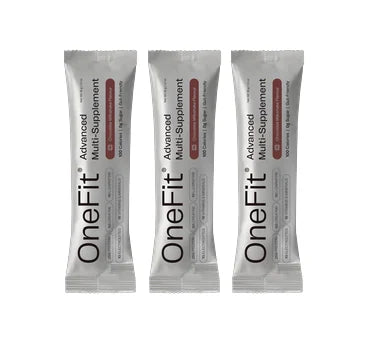
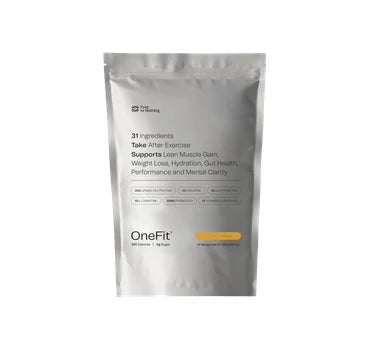
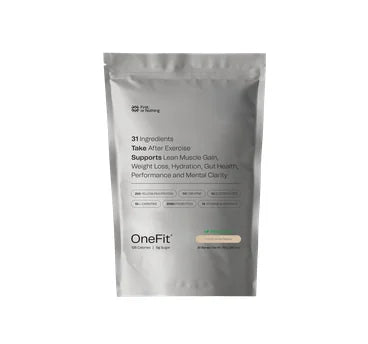



For Today & Tomorrow
The Complete System
For Performance & Longevity


 Shop
Shop
 Learn
Learn


Editorial Team
Want To Jump Ahead?
Lock in Limited Time OfferScientists have started questioning it very seriously.
Over the past decade, researchers studying sedentary behavior have found that prolonged sitting does far more than leave you feeling stiff at the end of the day. Blood circulation begins to slow. Muscle activity drops almost immediately. Metabolic function starts shifting in ways that affect how efficiently your body processes fats and regulates blood sugar.
What makes this more concerning is that exercise doesn’t automatically erase the damage.
A growing body of evidence suggests that even people who train regularly may still experience many of the biological effects associated with prolonged inactivity if most of their remaining hours are spent sedentary.
Over time, those changes begin adding up, increasing the risk of cardiovascular disease, insulin resistance, chronic inflammation, and, according to some of the largest population studies ever conducted on the subject, a greater likelihood of early mortality.
The human body evolved for movement. Modern life, increasingly, asks us to do the exact opposite.
Most people associate circulation problems with aging, cardiovascular disease, or poor diet.
But vascular changes begin surprisingly fast when movement disappears.
In a 2015 study published in Experimental Physiology, researcher Ryan Restaino and colleagues at the University of Missouri examined what happened when healthy young adults remained seated continuously for three hours.
Their findings were difficult to ignore.
Blood flow through the popliteal artery, the major vessel located behind the knee, dropped significantly, and endothelial function deteriorated measurably during the sitting period.
Endothelial cells line blood vessels and help regulate dilation, blood pressure, and circulation efficiency. Reduced endothelial function is widely recognized as an early marker associated with future cardiovascular disease.
This helps explain why prolonged sitting often produces the heavy-leg sensation many office workers know well after long stretches without movement.
The body is no longer circulating blood with the same efficiency it was designed to maintain.
Movement, especially in the legs, acts as part of the cardiovascular system itself. Remove that movement, and the entire system begins adapting almost immediately.
There is a tendency to think of metabolism only in terms of calorie burning. Physiologically, the process is far more complex.
Skeletal muscles serve as one of the body’s most metabolically active tissues, constantly regulating glucose uptake, fat metabolism, and insulin sensitivity. Prolonged inactivity interferes with all three.
One of the foundational papers in sedentary physiology came from researcher Marc Hamilton, whose 2007 paper published in Current Cardiovascular Risk Reports helped establish what scientists now call inactivity physiology.
Hamilton’s research focused on an enzyme called lipoprotein lipase, commonly abbreviated as LPL.
LPL helps break down triglycerides circulating in the bloodstream and plays a major role in fat metabolism. During prolonged sitting, LPL activity drops sharply. That decline affects how efficiently the body processes fats and regulates metabolic function throughout the day.
The consequences extend beyond energy balance. Reduced muscle contractions mean reduced glucose disposal, lower insulin sensitivity, and progressively poorer metabolic flexibility.
The process is subtle enough that most people never notice it happening. But biologically, inactivity is not neutral. It creates downstream metabolic consequences that the body must continuously compensate for.
The body is remarkably efficient at adaptation. That includes adapting downward.
When certain muscle groups stop receiving regular demand, the body begins conserving resources by reducing muscular efficiency and eventually reducing tissue quality.
For people spending most of their day seated, the first muscles affected tend to be the glutes, hamstrings, calves, and deep stabilizing muscles surrounding the hips and lower back.
The effects accumulate slowly enough that people rarely connect the symptoms back to inactivity. Lower back tightness becomes more frequent. Balance begins deteriorating. Walking long distances feels strangely more exhausting than it once did.
Athletes have understood this relationship for decades. Professional cyclists competing in events like the Tour de France routinely prioritize mobility sessions immediately after long seated travel periods because prolonged immobility compromises neuromuscular readiness before competition.
The principle applies just as much to non-athletes. The body responds to what it repeatedly experiences. And extended sitting teaches the body to become less physically capable.
The metabolic effects of inactivity become even clearer when researchers study what happens during short-term reductions in movement.
In 2018, Danish researcher Rasmus H. Olsen and colleagues published a study in Diabetologia examining what happened when healthy young men drastically reduced their normal daily activity levels for just two weeks.
Participants reduced daily steps from roughly 10,000 per day to approximately 1,500. The physiological changes were substantial. Insulin sensitivity declined measurably. Abdominal fat mass increased. Aerobic fitness dropped.
Even more concerning, participants showed early metabolic shifts associated with future type 2 diabetes risk. Fourteen days. That was enough to create meaningful biological deterioration in otherwise healthy individuals.
This matters because modern sedentary behavior often extends not for weeks, but for years. Many people now spend entire decades with chronically suppressed movement levels while assuming occasional exercise provides sufficient protection.
The physiology suggests otherwise.
Perhaps the strongest evidence connecting sedentary behavior to long-term health outcomes came from one of the largest analyses ever conducted on the subject.
In 2016, exercise scientist Ulf Ekelund and an international team of researchers published a meta-analysis in The Lancet examining data from more than one million participants across multiple countries.
Their conclusion was direct.
Individuals sitting more than eight hours daily while maintaining very low physical activity levels faced a significantly elevated risk of premature death.
The association was strong enough that researchers compared sedentary behavior to some of the largest modern lifestyle-driven health risks.
Adults sitting more than eight hours daily with minimal physical activity showed mortality risk patterns approaching those associated with obesity and chronic smoking behavior.
— Ekelund et al., The Lancet, 2016
Importantly, the researchers found very high physical activity levels helped offset some of that risk, but the amount required was substantial, roughly 60 to 75 minutes of moderate activity every day.
Far beyond what most people currently achieve.
The encouraging part of this research is how responsive the body remains once movement is reintroduced.
Preventing prolonged sitting does not require marathon training. In many cases, frequent interruption matters more than exercise intensity.
Researchers studying post-meal glucose regulation have repeatedly found that short walking periods following extended sitting improve blood sugar handling and reduce metabolic strain.
Even standing briefly changes muscular activation patterns enough to improve circulation. A person working an eight-hour desk job who stands or walks for three to five minutes every hour creates dramatically different physiological conditions compared with someone remaining seated continuously.
The cumulative effect matters as the body performs best under constant low-level movement.
Historically, humans rarely remained still for extended periods; however, modern environments have created a biological mismatch that our physiology has not adapted to handle particularly well.
Exercise, nutrition, recovery, and daily movement remain essential foundations of long-term health.
But modern lifestyles often place constant strain on the body. Long hours sitting, reduced movement, poor recovery, and daily stress can gradually affect the systems responsible for energy, metabolic health, physical performance, and overall resilience.
That is where a more complete approach to health support becomes increasingly important.
The First or Nothing Complete System was designed to support performance, recovery, longevity, and daily health as part of one simplified routine, helping support the body in environments where modern habits increasingly work against optimal health.

Longevity & Performance
The modern world has made prolonged sitting feel normal, but the human body was built for movement, circulation, and constant physical activity.
The more daily habits shift away from that design, the more long-term health begins moving in the wrong direction.
Supporting your body today means more than simply exercising; it means giving it the tools to perform, recover, and stay resilient despite increasingly sedentary lifestyles.
That philosophy sits at the core of the First or Nothing Complete System , designed to support long-term performance, recovery, and overall health in the modern world.
Get our weekly deep-dive into performance science, research summaries, and elite training protocols.
Join 45,000+ high-performers. Unsubscribe anytime.
Every batch of First or Nothing products is independently tested for heavy metals, purity, and dosage accuracy to ensure safety and quality.

First or Nothing is independently tested for heavy metals, purity, and dosage accuracy.
 OneFit®
OneFit®
OneFit®
OneFit®
OneFit®
OneFit®
OneFit®
OneFit®
OneFit®
OneFit®
OneFit®
First or Nothing is independently tested for heavy metals, purity, and dosage accuracy.
OneLife™
OneLife™
OneLife™
© 2026 FON Health AU Pty Ltd


Please select your shipping country.
Buy from the country of your choice. Remember that we can only ship your order to addresses location in the chosen country.

 Ships in 24h
"EXCELLENT"
 rated 4.8/5 on


