

For Today & Tomorrow
The Complete System
For Performance & Longevity


 Shop
Shop
 Learn
Learn


Editorial Team
Want To Jump Ahead?
Lock in Limited Time OfferSo you do the obvious thing: drink more water.
An hour later, you still feel flat. Your head aches. Your muscles feel twitchy. The next session starts badly before it even starts.
Sweat is not just water leaving your body. It carries minerals that help your nerves fire, your muscles contract, and your body hold onto the fluid you are trying to replace.
In a 2019 study of 1,303 athletes, Barnes, Anderson, Stofan, and colleagues found that average sweat rates reached 1.51 litres per hour in American football players and 1.28 litres per hour in endurance athletes. The same paper reported that sweat sodium losses varied widely by sport and athlete, which means two people can do the same session and finish with very different recovery needs.
“A drink volume greater than sweat loss during exercise must be ingested to restore fluid balance, but unless the sodium content of the beverage is sufficiently high this will merely result in an increased urinary output.” — Shirreffs and Maughan, 1998
Protein gets the headlines. Sleep gets the lectures. But after long, hot, or high-sweat training, the missing piece may be more basic: sodium, potassium, magnesium, and enough fluid to put the body back where it started.
There is no single normal amount of sweat.
Some people finish a session looking barely touched. Others leave a puddle on the floor, crusty white lines on their cap, and a strange craving for salty food. That difference is not weakness or drama. It is physiology.
The American College of Sports Medicine position stand by Sawka, Burke, Eichner, Maughan, Montain, and Stachenfeld explains that exercise fluid replacement should account for sweat rate, sweat electrolyte concentration, exercise duration and environmental conditions. In simple terms, heat, intensity, body size, clothing, and individual biology all change the equation.
Sodium is the mineral to watch most closely because it is the major electrolyte lost in sweat. It helps regulate fluid outside your cells and supports the blood volume your body relies on to move oxygen, dump heat, and keep performance from sliding.|
That is why plain water can sometimes fail after hard training. It may quench thirst, but if sodium losses are high, the body may not hold onto that fluid efficiently.
A classic 1998 study by Shirreffs and Maughan tested post-exercise rehydration after subjects were dehydrated by exercise. Their conclusion was blunt: both drink volume and sodium concentration affected how well fluid balance was restored. Without enough sodium, drinking extra fluid mainly increased urine output.
That finding still matters because it explains a common real-world problem. The athlete who drinks bottle after bottle after training but keeps needing the bathroom may not be “bad at hydrating.” They may be replacing water without replacing enough of what made that water useful.
Electrolytes are often sold as one blended idea, but the body does not use them interchangeably.
Sodium is the recovery mineral most closely tied to sweat loss. It helps the body maintain extracellular fluid balance, which is why it becomes especially relevant after long sessions, summer training, sauna use, team sport, or endurance work.
Potassium works heavily inside the cell. The NIH Office of Dietary Supplements states that potassium helps maintain cellular fluid balance and is required for proper nerve transmission and muscle contraction.
That means potassium matters for the electrical side of movement. Muscles do not simply “have energy” and contract. They rely on signals, gradients, and precise mineral balance to do their job.
Magnesium plays a different role again. The NIH notes that magnesium is involved in the active transport of calcium and potassium ions across cell membranes, a process important for nerve impulse conduction, muscle contraction, and normal heart rhythm.
This is where the wellness world often gets sloppy.
Magnesium is not a guaranteed cramp cure. Potassium is not the only “muscle mineral.” Sodium is not automatically bad, just because too much sodium in the wrong dietary context can be a health problem.
For an active person sweating heavily, the question is not whether electrolytes are good or bad. The better question is: what did the session take from you, and what do you need to replace before the next one?
Cramps are where electrolyte advice usually gets loud, confident and wrong.
It is tempting to blame every calf lock-up on low sodium or low magnesium. Sometimes fluid and electrolyte loss may be part of the picture, especially in hot conditions or long events. But the science does not support a simple one-mineral explanation.
In a 2009 review in the British Journal of Sports Medicine, Martin Schwellnus examined the evidence behind the dehydration, electrolyte depletion and altered neuromuscular control theories of exercise-associated muscle cramps. His review argued that cramping cannot be fully explained by dehydration or electrolyte depletion alone, and that fatigue-related neuromuscular changes are likely important.
That fits what many athletes experience. A cramp often appears late in a race, late in a match, or after pushing harder than usual. It is not always the hottest day or the saltiest sweater that causes cramps. Sometimes it is the overloaded muscle, the aggressive pace or the repeated sprint you were not conditioned to tolerate.
A 2015 ultramarathon study by Hoffman, Stuempfle, Valentino and Mauser found that sodium intake during events lasting up to 30 hours in hot conditions did not prevent muscle cramping, dehydration, hyponatremia or nausea.
This makes the claim more precise. Electrolytes can support hydration and muscle function, but they are not a force field against every cramp. Training load, fatigue, pacing, heat, previous cramp history and hydration status can all be involved.
The smarter recovery move is not to swallow more minerals blindly. It is to match your recovery strategy to the session: how long it was, how hot it was, how much you sweated and how soon you need to perform again.
The easiest way to miss an electrolyte problem is to call it something else.
You think you are tired because the workout was hard. You blame poor sleep, low motivation or the fact that you are “getting older.” Sometimes those are true. But after heavy sweat loss, lingering fatigue can also reflect incomplete rehydration.
A useful example: imagine two runners finishing a 90-minute summer session. One loses 0.5 kg. The other loses 2 kg and has salt stains on their shirt. If both drink the same single bottle of plain water afterwards, they have not done the same recovery. One may be close to fine. The other may be starting the next day, under-replaced.
That is why sweat clues matter. Salt marks on clothing, unusually heavy fluid loss, post-workout headaches, persistent thirst, dark urine, dizziness or feeling “washed out” after hot training are all signs to take seriously. They are not a diagnosis, but they are useful signals.
The goal is not to obsess over every drop. It is to stop pretending all sweat is equal.
For short, easy sessions, water and a normal meal may be enough. For long, hot or high-sweat sessions, recovery usually needs a more deliberate plan: fluid, sodium, food, cooling and time.
One of the biggest myths about electrolytes is that they “give you energy.” They do not provide energy unless they are part of a drink or product that also contains calories. What they actually do is support the systems that allow performance to happen: fluid balance, nerve signalling and muscle contraction.
Another common mistake is assuming water is always enough. For light activity or short sessions, it often is, but after heavy sweat loss, especially when sodium loss is high, water alone may not fully replace what the body has lost.
Cramps are often misunderstood, too. Many people blame them automatically on low magnesium, but magnesium is only one part of the picture. Exercise cramps are multi-factorial, and Schwellnus’ 2009 review points to altered neuromuscular control and fatigue as important contributors.
Sodium is also frequently misread. More is not automatically better, because individual needs vary, and people with high blood pressure, kidney disease, heart conditions or relevant medications should be careful with high-sodium supplements.
Finally, electrolytes are not just for marathon runners. Endurance athletes are obvious candidates, but heavy sweaters in gym training, team sport, outdoor work, sauna use and hot climates may also need to think more carefully about electrolyte replacement.
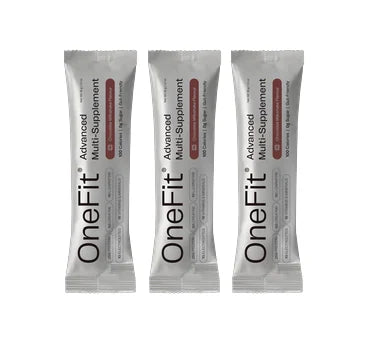
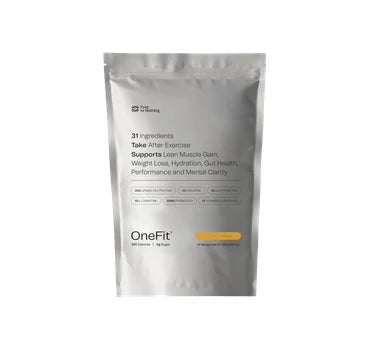
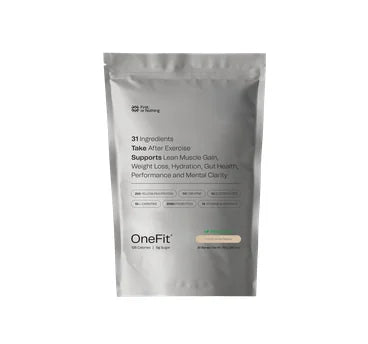
That makes OneFit® a useful part of a serious recovery routine. It is about giving active bodies targeted daily support for the demands that come with training, sweating and showing up again tomorrow.

For Performance
$3.30/day
$297/90 DAYS
Electrolytes are not a shortcut around sleep, nutrition, or smart programming. They are one part of the recovery system, and they matter most when sweat loss is high.
If you finish training soaked, salty, and strangely flattened, water alone may not be the full answer. Replace the fluid, respect the minerals, and build recovery around what the session actually took from you.
For anyone training hard enough to feel that difference, OneFit ® can help support the daily recovery foundation: hydration habits, performance nutrition, and the consistency needed to show up strong again tomorrow.
Get our weekly deep-dive into performance science, research summaries, and elite training protocols.
Join 45,000+ high-performers. Unsubscribe anytime.
Every batch of First or Nothing products is independently tested for heavy metals, purity, and dosage accuracy to ensure safety and quality.

First or Nothing is independently tested for heavy metals, purity, and dosage accuracy.
 OneFit®
OneFit®
OneFit®
OneFit®
OneFit®
OneFit®
OneFit®
OneFit®
OneFit®
OneFit®
OneFit®
First or Nothing is independently tested for heavy metals, purity, and dosage accuracy.
OneLife™
OneLife™
OneLife™
© 2026 FON Health AU Pty Ltd


Please select your shipping country.
Buy from the country of your choice. Remember that we can only ship your order to addresses location in the chosen country.

 Ships in 24h
"EXCELLENT"
 rated 4.8/5 on


