
For Today & Tomorrow
The Complete System
For Performance & Longevity


 Shop
Shop
 Learn
Learn


Editorial Team
Want To Jump Ahead?
Lock in Limited Time OfferAt the centre of that rhythm is cortisol.
Cortisol is often described as the stress hormone, which makes it sound like something you should crush, block, or detox out of your body. That is wrong. Cortisol helps you wake up, think, move, respond, and survive. You want cortisol in the morning when your day starts. You do not want it acting like a second espresso at midnight.
This is why ashwagandha has become one of the most talked-about supplements in the stress and sleep space. Not because it magically deletes cortisol. Not because it knocks you out like a sedative. The better question is whether it helps the body respond to stress more appropriately and whether that shift can improve sleep, recovery, and the ability to feel calm without feeling flat.
The research is not perfect, and the hype is often louder than the evidence. But several human trials suggest something worth paying attention to: standardized ashwagandha extracts may help reduce perceived stress and support sleep quality in some adults over several weeks.
That may sound modest on paper. But if you are sleeping badly, running on pressure and struggling to recover, even a small shift in the stress response can feel significant.
A healthy stress response is supposed to be temporary. Your body senses a threat or demand, releases stress hormones, mobilises energy, sharpens attention, and helps you deal with the problem. Then the system should settle. Modern life rarely gives it that clean finish.
A difficult conversation becomes an inbox full of follow-ups. A hard training session is followed by six hours of sitting, three coffees, and scrolling under bright light at night. Financial pressure, family load, work deadlines, and sleep debt all get layered together until the nervous system starts treating ordinary days like emergencies.
The result is not always dramatic. Often, it looks boringly familiar: waking up tired, craving caffeine, feeling irritable by late afternoon, training without recovering properly, then lying in bed with a racing mind.
Consider the person who does everything “right” on paper. They train four times a week, eat a decent diet, and avoid obvious junk. But they check work messages before bed, wake at 3am most nights and feel weirdly alert the moment they should be winding down. For them, the issue may not be a lack of discipline. It may be that their body has forgotten how to come out of performance mode.
That is where the ashwagandha conversation becomes interesting.
Ashwagandha, or Withania somnifera, is a plant used traditionally in Ayurvedic medicine. In supplement science, it is usually called an adaptogen, a term that gets thrown around so often it has almost lost meaning. In plain English, it refers to a substance that may help the body adapt to stress rather than simply stimulate or sedate it.
That distinction matters. If you are using ashwagandha, the goal is not to feel numb. The goal is to help the stress system stop overreacting when the threat has passed.
The ashwagandha research most worth discussing is not based on wellness folklore or influencer anecdotes. It comes from randomized, placebo-controlled human trials using standardized extracts.
In 2012, Chandrasekhar, Kapoor, and Anishetty published a randomized, double-blind, placebo-controlled study in the Indian Journal of Psychological Medicine. The trial followed adults with chronic stress over 60 days. Participants received either a placebo or a high-concentration full-spectrum ashwagandha root extract.
The results were notable. The ashwagandha group reported greater reductions in stress-assessment scores than the placebo group, and the researchers also reported a significant reduction in serum cortisol.
That is the kind of result marketers love to flatten into one line: “Ashwagandha lowers cortisol.”
But the real message is more nuanced. The study suggests ashwagandha may help stressed adults shift toward a healthier stress profile over time. It does not prove that everyone should lower cortisol. It does not mean every extract works the same way. It does not make ashwagandha a treatment for anxiety disorders, burnout or insomnia.
In 2019, Lopresti and colleagues published another randomized, double-blind, placebo-controlled trial in stressed, healthy adults. Participants took either placebo or 240 mg per day of a standardized ashwagandha extract for 60 days. The ashwagandha group showed significant reductions in anxiety scores compared with placebo, and the study also examined stress-related hormones including cortisol, DHEA-S and testosterone.
Again, the timeline matters. These were not instant effects after one capsule. These were daily-use studies over weeks.
That is one of the most important expectations to set for readers. Ashwagandha is not a rescue remedy for a chaotic Tuesday. It is better understood as a consistency compound, something that may support the stress response when used as part of a steady routine.
The strongest claim is not that ashwagandha “switches off stress.” It is that some human evidence suggests it may help the body handle stress with less internal noise.
Poor sleep is often the first place chronic stress becomes impossible to ignore.
You can push through a stressful day. You can hide irritability in a meeting. You can train tired and tell yourself it is discipline. But when sleep starts to fracture, the body usually wins the argument.
Stress and sleep have a circular relationship. Stress makes sleep lighter and harder to initiate. Poor sleep makes the next day’s stress feel bigger. Then that greater stress makes the next night worse. After a few weeks, people stop describing themselves as stressed and start saying things like, “I just don’t feel like myself.”
Ashwagandha has been studied here too.
In 2021, Cheah and colleagues published a systematic review and meta-analysis in PLOS ONE looking at ashwagandha extract and sleep. The review included five randomized controlled trials with 400 participants. The authors found that ashwagandha had a small but significant positive effect on overall sleep, with stronger effects in adults with insomnia, at doses of 600 mg per day or more, and when used for at least eight weeks.
In a 2021 review of five randomized controlled trials, ashwagandha showed a significant improvement in overall sleep, with stronger effects seen in people with insomnia and in studies lasting at least eight weeks.
That does not make it a sleeping pill. In fact, calling it one misses the point.
A sleeping pill is designed to force or induce sleep. Ashwagandha appears to work in a different lane. Its potential value may come from helping the nervous system downshift, which can make better sleep more likely when the rest of the environment supports it.
That last part matters. If someone is taking ashwagandha but drinking caffeine at 5 p.m., working under bright light until midnight, and sleeping beside a phone that pings all night, they are asking a supplement to clean up a lifestyle problem in real time.
No premium brand should pretend that is how health works.
The stronger position is also the more honest one: ashwagandha may support better sleep quality when it sits inside a broader recovery plan. That plan still needs consistent sleep timing, enough food, enough protein, sunlight, movement, fewer late-night stimulants, and a genuine attempt to reduce the pressure that created the problem.
Most people hear “recovery” and think about training. Sore legs. Heavy lifts. A hard run. A better post-workout routine.
But recovery is not only muscular. It is neurological.
Your brain and nervous system are constantly deciding whether you are safe enough to repair, digest, sleep deeply, and rebuild. When stress stays high, the body prioritises readiness over restoration. That is useful in a genuine emergency. It is less useful when the “emergency” is a calendar, a group chat, and a credit card bill.
For athletes and high-output professionals, this distinction is crucial. You can have a good training plan and still under-recover if the rest of your life keeps your system on alert. The body does not separate gym stress from work stress as neatly as your calendar does. Load is load.
Imagine two people doing the same strength session.
One sleeps eight hours, eats well, gets sunlight in the morning, and has a calm evening. The other sleeps five broken hours, skips lunch, drinks coffee late and finishes the day arguing with spreadsheets in bed. On paper, the workout is identical. In the body, the recovery environment is completely different.
This is where cortisol becomes a useful signal rather than a villain. Elevated stress chemistry at the wrong times can interfere with the conditions recovery needs. Ashwagandha may help some people nudge that system back toward balance, but it cannot replace the behaviours that tell the body it is safe to recover.
For a premium supplement routine, that is the right role: support, not salvation.
The point of a good supplement routine is not to chase every new stress trend. It is to build a foundation you can actually repeat.
For people dealing with stress, poor sleep quality and patchy recovery, the first move is still the least glamorous: fix the rhythm of the day. Morning light. Smarter caffeine timing. Enough food. Training that matches your recovery capacity. A sleep routine that does not begin with a screen six inches from your face.
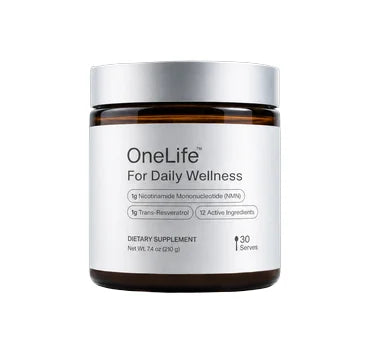
Once those basics are taken seriously, a targeted supplement can make more sense. That is where OneLife™ fits: not as a shortcut around sleep, stress management or recovery, but as a simple daily support for people who want to give their body a steadier foundation.
OneLife™ is designed for the person who is doing the work but still feels like their system is running too hot, the early riser, the hard trainer, the parent, the business owner, the person who can perform all day but struggles to properly switch off at night.
It gives your routine a clear anchor: take it consistently, pair it with better sleep habits, and build around the same goal every day, helping your body recover from the load you keep asking it to carry.

For Longevity & Cellular Health
$3.90/day
$351/90 DAYS
Ashwagandha is not a miracle herb, and the best evidence does not need it to be one. Human studies suggest standardized extracts may help some adults reduce perceived stress and support sleep quality over several weeks, especially when the rest of the recovery picture is not being ignored.
The real goal is not to crush cortisol. It is to help your body remember how to come down after stress, so sleep, recovery, and energy have a chance to do their job.
Get our weekly deep-dive into performance science, research summaries, and elite training protocols.
Join 45,000+ high-performers. Unsubscribe anytime.
Every batch of First or Nothing products is independently tested for heavy metals, purity, and dosage accuracy to ensure safety and quality.

First or Nothing is independently tested for heavy metals, purity, and dosage accuracy.
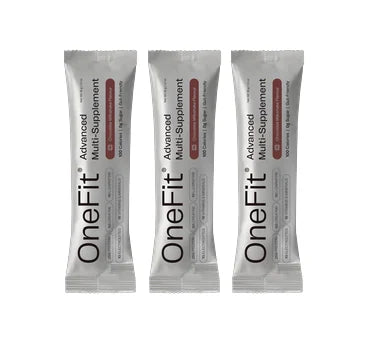
 OneFit®
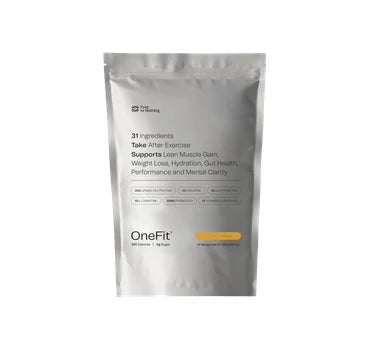
OneFit®
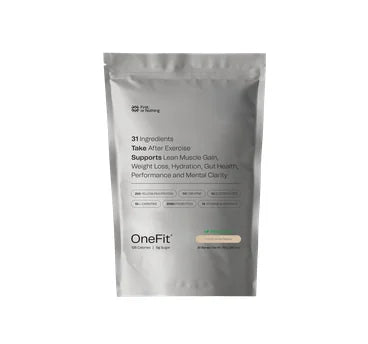
OneFit®
OneFit®
OneFit®
OneFit®
OneFit®
OneFit®
OneFit®
OneFit®
OneFit®
First or Nothing is independently tested for heavy metals, purity, and dosage accuracy.
OneLife™
OneLife™
OneLife™
© 2026 FON Health AU Pty Ltd


Please select your shipping country.
Buy from the country of your choice. Remember that we can only ship your order to addresses location in the chosen country.

 Ships in 24h
"EXCELLENT"
 rated 4.8/5 on


