
For Today & Tomorrow
The Complete System
For Performance & Longevity


 Shop
Shop
 Learn
Learn


Editorial Team
Want To Jump Ahead?
Lock in Limited Time OfferSo you make the usual deal with yourself: push through today, sleep better tonight, get your discipline back tomorrow. But then tomorrow feels the same.
You start wondering whether you are burned out, overtraining, getting lazy, or simply not built for the routine you thought you wanted.
Sometimes that is exactly what it is, but for active women, a sudden fitness crash is not always a mindset problem. Sometimes it is a blood-and-energy problem, and iron deficiency is one of the most commonly missed reasons your body can feel like it is quitting before you do.
Iron deficiency is one of the most common nutritional issues in female athletes and active women. It can look like a bad training block. It can look like poor recovery. It can look like a sudden loss of fitness in someone who has not changed much at all.
In 2024, Pengelly, Pyne, Pumpa, and Etxebarria published a systematic review in the Journal of Sport and Health Science examining iron deficiency, supplementation, and sports performance in female athletes. Their review stated that up to 60% of female athletes experience iron deficiency, and concluded that high-level female athletes with iron deficiency can take a hit to endurance performance.
That number should stop any active woman in her tracks.
Because if your training suddenly feels harder, your recovery has gone backwards, and your usual discipline is not getting the usual result, the missing piece may be inside your bloodwork.
Up to 60% of female athletes experience iron deficiency.
— Pengelly, Pyne, Pumpa and Etxebarria, Journal of Sport and Health Science, 2024
Iron is not just a “don’t get anaemic” mineral.
It helps your body make haemoglobin, the protein in red blood cells that carries oxygen from your lungs to the rest of your body. It also plays a role in muscle energy systems, including the processes that help you turn food and oxygen into usable output during training. Australia and New Zealand’s Nutrient Reference Values describe iron as a component of haemoglobin, myoglobin, and enzymes involved in redox reactions, with haemoglobin central to oxygen transport.
That is why low iron can feel so strange. You are not necessarily bedridden. You may not look unwell. You may still finish the workout, answer emails, cook dinner, and tell everyone you are fine. But everything costs more.
The warm-up feels like the session. The tempo run turns into damage control. Your heart rate seems too high for the pace. You feel breathless earlier than usual. You are sore for longer, flatter between sessions, and less excited to train, even though training used to be the thing that gave you energy.
Imagine a 34-year-old woman training for a half-marathon while working full-time. She has heavy periods, eats mostly plant-based foods during the week, drinks coffee with breakfast, and has slowly increased her running volume. Nothing looks reckless on paper. But over eight weeks, her easy pace starts to feel hard, her legs feel dead on hills, and she begins skipping strength sessions because she “just cannot be bothered.”
That is why many women blame character. In reality, that exact pattern deserves a proper look at iron status, energy intake, menstrual blood loss, and recovery load.
One of the biggest misunderstandings about iron is that you only need to worry when you are anaemic.
Iron deficiency and iron-deficiency anaemia are related, but they are not identical. Anaemia is the later, more obvious stage, when haemoglobin drops. Before that, a woman can have depleted iron stores and still sit inside a “normal” haemoglobin range.
The Australian Bureau of Statistics explains the development of iron deficiency anaemia in stages: first, iron stores decrease and serum ferritin drops; later, iron stores become depleted, and haemoglobin production is affected, but haemoglobin may still remain within normal ranges; only in the final stage does haemoglobin decrease enough to indicate iron-deficiency anaemia.
A woman can be told her haemoglobin is fine while her ferritin, the storage marker that shows how much iron is in reserve, is already low. Australian Red Cross Lifeblood also notes that iron deficiency can occur without anaemia, and that ferritin is required to confirm the diagnosis.
This is where the conversation needs to become more precise. “Your blood test is fine” is not the same as “your iron stores are optimal for the amount of training and life stress you are carrying.”
A tired active woman should not diagnose herself from a TikTok symptom list, but she also should not ignore persistent fatigue just because she is technically still functioning.
One of the most useful studies for this topic did not involve elite athletes. It involved tired women who were not anaemic.
In 2003, Verdon, Burnand, Stubi, Bonard, Graff, Michaud, Bischoff, de Vevey, Studer, Herzig, Chapuis, and Tissot published a double-blind randomised placebo-controlled trial in The BMJ. The study included 144 women aged 18 to 55 with unexplained fatigue who were not anaemic. They were assigned to either oral ferrous sulphate providing 80 mg of elemental iron per day or placebo for four weeks.
The result was not vague. Fatigue decreased by 29% in the iron group compared with 13% in the placebo group, and the benefit appeared restricted to women with low or borderline ferritin.
That does not mean every tired woman should take iron. It means fatigue can be linked to iron status even before anaemia appears.
For active women, that distinction matters because training adds another layer of demand. When you are asking your body to lift, run, ride, work, recover, and repeat, “not anaemic” may not be the same as “ready to perform.”
Active women are not just smaller versions of male athletes.
They often face a different set of iron pressures: menstrual blood loss, lower overall energy intake, dieting phases, vegetarian or plant-forward eating patterns, and training-related iron losses.
In 2008, Peeling, Dawson, Goodman, Landers, and Trinder published a review in the European Journal of Applied Physiology titled “Athletic induced iron deficiency: new insights into the role of inflammation, cytokines and hormones.” They described several exercise-related pathways for iron loss, including haemolysis, haematuria, sweating, and gastrointestinal bleeding.
Some of those losses are small on their own. The problem is repetition. A hard session here, a long run there, a heavy period every month, a low-iron diet most weekdays, coffee too close to iron-rich meals, and suddenly the “healthy active lifestyle” is quietly draining the very mineral needed to support oxygen transport and energy production.
Plant-based eating is not the villain, but it does require more attention. Non-haem iron from plant foods is generally less readily absorbed than haem iron from animal foods, and absorption can be influenced by what else is eaten at the same meal. The ABS notes that not all dietary iron is equally available to the body, and absorption is influenced by iron status, meal iron content, and meal composition.
That means a woman can be eating well and still not be covering her needs.
This is also why the standard wellness advice can fall short. More sleep may help. A deload may help. Better programming may help. But none of those solves a depleted iron reserve if that is part of the problem.
The first move is not to panic-buy iron.
Iron is essential, but more is not automatically better. The 2018 IOC consensus statement by Maughan, Burke, Dvorak, and colleagues on dietary supplements and the high-performance athlete places supplements in context: they can help manage micronutrient deficiencies and meet needs that are difficult to achieve through food alone, but they are not a free pass to skip proper assessment.
The smarter move is to investigate. If you are an active woman dealing with unexplained fatigue, poor recovery, heavy periods, breathlessness during normal training, low mood, restless legs, dizziness, unusual cravings, or a sudden drop in performance, ask a qualified healthcare professional about iron studies. That conversation may include haemoglobin, ferritin, transferrin saturation, soluble transferrin receptor, inflammation markers, menstrual history, gut symptoms, diet, and training load.
The Australian Prescriber review on non-anaemic iron deficiency notes that patients can present with unexplained, non-specific symptoms, and that iron studies will usually show low ferritin and low transferrin saturation with normal haemoglobin. It also stresses that the cause of iron deficiency should be identified and managed.
The important part is that low iron is not just a number to patch. It is a clue. It may point to heavy periods, inadequate intake, poor absorption, gastrointestinal blood loss, low energy availability, or a mismatch between training demand and nutritional support.
The modern active woman is often training on top of a packed life. Early workouts, long workdays, family responsibilities, dieting pressure, poor sleep, and the constant push to do more can create a situation where recovery is always slightly underfunded.
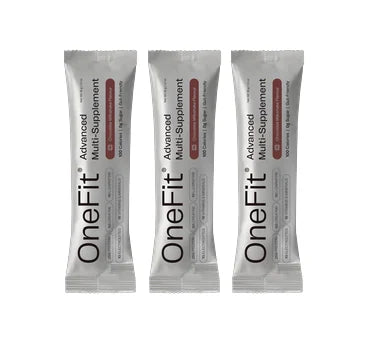
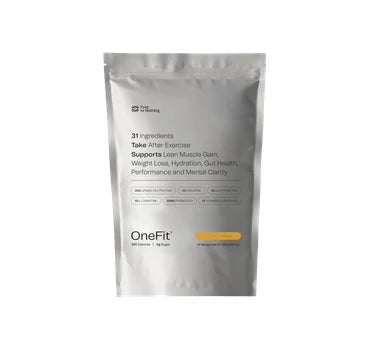
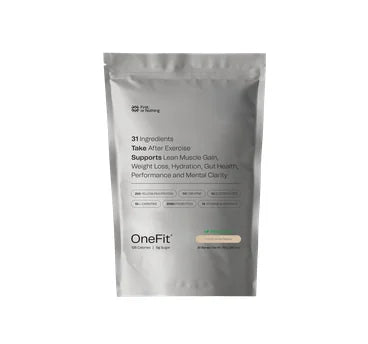
That is where OneFit® fits naturally.
Not as a replacement for blood testing, food, sleep, or medical care, but as a daily foundation for women who want their nutrition habits to match the demands of their training.
Because if your body is expected to perform consistently, your inputs need to be consistent too. That means enough food, enough protein, enough rest, sensible training, and targeted micronutrient support that works with the reality of an active lifestyle, not the fantasy version where every meal is perfect and every recovery day goes to plan.
OneFit® is designed for women who are serious about showing up, but smart enough to know that performance is not built on willpower alone. It supports the daily nutritional baseline that active women often struggle to maintain when life gets busy, training ramps up, and recovery starts slipping.

For Performance
$3.30/day
$297/90 DAYS
If your workouts suddenly feel harder, your recovery is dragging, and your usual discipline is not producing the usual result, do not reduce the whole problem to willpower.
For many active women, the question is not “Why am I so unmotivated?” It is whether the body has the blood, oxygen, and nutrient support it needs to keep doing what you are asking it to do.
That is why OneFit® belongs in the conversation. It is not there to replace proper testing, good food, sleep, or medical advice; it is there to help active women build a more consistent daily foundation, so their nutrition support can keep up with the life and training they are already committed to.
OneFit® is for women who do not want to guess their way through recovery.
Get our weekly deep-dive into performance science, research summaries, and elite training protocols.
Join 45,000+ high-performers. Unsubscribe anytime.
Every batch of First or Nothing products is independently tested for heavy metals, purity, and dosage accuracy to ensure safety and quality.

First or Nothing is independently tested for heavy metals, purity, and dosage accuracy.
 OneFit®
OneFit®
OneFit®
OneFit®
OneFit®
OneFit®
OneFit®
OneFit®
OneFit®
OneFit®
OneFit®
First or Nothing is independently tested for heavy metals, purity, and dosage accuracy.
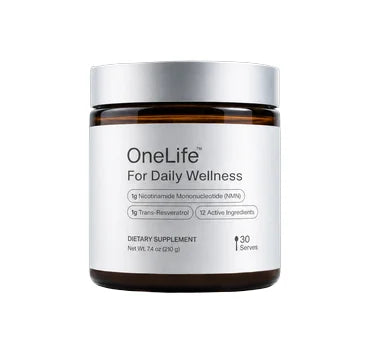
OneLife™
OneLife™
OneLife™
© 2026 FON Health AU Pty Ltd


Please select your shipping country.
Buy from the country of your choice. Remember that we can only ship your order to addresses location in the chosen country.

 Ships in 24h
"EXCELLENT"
 rated 4.8/5 on


