

For Today & Tomorrow
The Complete System
For Performance & Longevity


 Shop
Shop
 Learn
Learn


Editorial Team
Want To Jump Ahead?
Lock in Limited Time OfferNone of it looks extreme on its own.
But suddenly, your “healthy routine” looks less like a plan and more like a very expensive guessing game.
This is where a smart wellness habit starts to go sideways: duplicated ingredients, wasted money, and a daily routine you no longer fully understand
Nearly 1 in 2 Australian adults used a complementary medicine product in the past year.
— Harnett et al., Nutrients, 2023
In a nationally representative survey of 2,351 Australian adults, Harnett et al. found that supplement and complementary medicine use was far from niche. Half of those users also said they always or often took complementary medicines on the same day as prescription medicines, which is exactly why a crowded supplement stack deserves more scrutiny than most people give it.
That does not mean your stack is automatically dangerous. It means your stack deserves a second look.
Because the real question is not, “What else should you take?” It is: “What are you already taking twice?”
Supplement overlap rarely looks obvious.
Most people are not knowingly taking three bottles labelled zinc. Instead, they take a multivitamin, an immune product, and a greens powder that all happen to include zinc somewhere on the back panel.
That is how one sensible purchase turns into a stack full of repeats. The same can happen with magnesium, vitamin D, vitamin C, selenium, iodine, calcium, iron, B6, B12, folate, and vitamin A. These nutrients can appear in multivitamins, sleep formulas, beauty blends, performance products, electrolyte powders, and daily wellness formulas.
The front label tells you the product’s story. The back label tells you what you are actually taking.
The U.S. National Institutes of Health Office of Dietary Supplements notes that many multivitamin/mineral-type products are not necessarily labelled as multivitamins. A product might be marketed as an “antioxidant formula” while still containing vitamin C, vitamin E, selenium, zinc, and beta-carotene.
That matters because your body does not separate nutrients by brand story.It only sees the total.
A collagen product with vitamin C may be perfectly reasonable. A greens powder with added micronutrients may also be reasonable. A multivitamin can be useful for some people. But if all three sit in the same morning routine, the question is no longer whether each product looks sensible in isolation.
The question is what the whole stack adds up to.
Nutrient safety is usually discussed in terms of total intake. The Food and Nutrition Board sets Tolerable Upper Intake Levels, or ULs, for many nutrients. These are the maximum daily intakes unlikely to cause adverse effects, and the NIH explains that when intake exceeds the UL, the risk of adverse effects rises.
That does not mean every duplicated ingredient pushes someone into dangerous territory. Most people are nowhere near that line with ordinary food and moderate supplement use.
But it does mean “I only take one serve of each product” is not the same as knowing your daily intake.
The most common cost of supplement overlap may not be a dramatic side effect. It may be the slow, boring leak of money.
A person buys a multivitamin for general health. Then they add a greens powder because it feels like an upgrade. Then an immune formula during winter. Then magnesium for sleep. Then a training product with electrolytes and added minerals.
Each purchase makes sense at the time. Over months, the routine becomes harder to explain.
Bailey et al. examined supplement motivations in U.S. adults using NHANES 2007–2010 data and published the results in JAMA Internal Medicine in 2013. The most common reasons people gave for using supplements were to “improve” overall health, reported by 45%, and to “maintain” health, reported by 33%. Only 23% of products were used based on a recommendation from a healthcare provider.
That finding is important because it shows how supplement decisions often happen: not from a clear diagnosed gap, but from a broad desire to do something good.
There is nothing wrong with wanting to support your health. The problem starts when every vague goal gets its own product.
Energy, immunity, stress, sleep, daily wellness and recovery.
Those categories sound different on the front of a bottle. On the label, they can share many of the same nutrients.
A real example is easy to imagine. Someone takes a multivitamin in the morning, a greens powder at lunch, and an immune capsule at night. Across those three, they may be getting vitamin C, zinc, selenium, and several B vitamins more than once. Then they add a sleep powder with magnesium and B6, while their electrolyte mix also contains magnesium.
Nothing looks reckless. The routine just becomes crowded.
At that point, the person is not necessarily getting a more advanced health system. They may simply be paying multiple brands to solve the same problem in slightly different packaging.
One of the biggest downsides of a crowded stack is that it becomes almost impossible to know what is working.
If you add one supplement and your sleep improves, you have a clue. If you add five products in the same week and your digestion changes, your energy spikes, your skin breaks out, or your sleep gets worse, you have a puzzle.
Was it magnesium? Was it the greens powder? Was it zinc on an empty stomach? Was it caffeine in the training formula? Was it the sweetener, fibre, iron, herbal extract, or simply the fact that your routine changed too quickly?
This is where supplement stacking becomes noise.
Kantor et al. reported in JAMA in 2016 that dietary supplement use among U.S. adults remained common between 1999 and 2012, but patterns changed by product type. Multivitamin/mineral use decreased from 37% in 1999–2000 to 31% in 2011–2012, while use of some individual supplements increased.
That shift matters because more targeted products can create the illusion of precision. A person may think they have moved beyond the basic multivitamin into a smarter routine, but the total stack may be less transparent than before.
The smarter move is slower.
Add one product at a time. Give it enough time to judge. Know why it is there. Keep a note of any changes. Remove what does not have a clear role.
This sounds basic because it is. It is also the part that many people skip. A supplement routine should make your health easier to manage, not harder to interpret.
The point is simpler: supplements are active products. They deserve more respect than “it’s natural, so it doesn’t count.”
In Australia, complementary medicines include products such as vitamins, minerals, and herbal preparations, according to the Therapeutic Goods Administration. They are non-prescription medicines, but non-prescription does not mean irrelevant.
This becomes especially important when supplements sit beside medications.
Harnett et al.’s 2023 Australian survey found that half of complementary medicine users reported always or often using these products on the same day as prescription medicines. Participants aged 65 and over were five times more likely than those aged 18–24 to use complementary medicines and other medications on the same day.
That does not mean people should avoid every supplement if they take medication. It does mean their doctor, pharmacist or qualified practitioner should know what is in the full stack.
Not “I take a few vitamins.” The actual list.
Brand names. Doses. Powders. Capsules. Sachets. Training formulas. Sleep products. Herbal blends. Anything taken most days.
This is not about creating fear. It is about avoiding blind spots.
A person might not think of magnesium as part of their medicine list. They might forget that their greens powder contains iodine. They might not realise their immune formula contains zinc on top of their multivitamin. They might assume a botanical ingredient is automatically gentle because it came from a plant.
That kind of thinking is exactly how confusion enters a routine.
The fastest way to fix an overlap is not to throw everything away. It is to make every product defend its place.
Start with one question: what job is this product doing?
If the answer is vague — “general health,” “just in case,” “I saw it online,” “everyone takes it” — put it under review. Not necessarily in the bin, but under review.
Next, line up the labels and scan for repeats. Circle vitamin D, zinc, magnesium, vitamin C, B6, B12, folate, selenium, iodine, iron, calcium, and vitamin A. These are common overlap points.
Then check the dose per serve. The ingredient being present matters, but the amount matters more. Three small amounts may not be an issue; three meaningful doses might be. The only way to know is to look.
Now consider the timing. Are you taking multiple products at once? Are any being taken with medication? Are you using powders and capsules from different categories that all claim “daily support”?
Finally, remove clutter before adding more. The most ignored step in wellness is subtraction.
For many people, the answer is not another bottle. It is a cleaner baseline, one daily formula that earns its place because it helps simplify the routine instead of adding more noise.
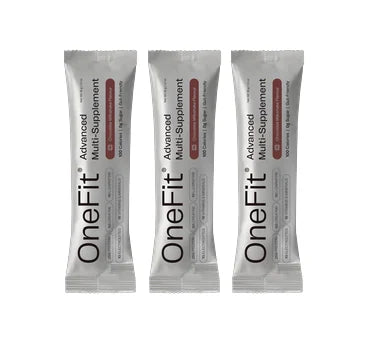
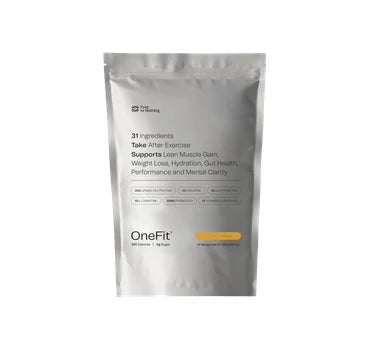
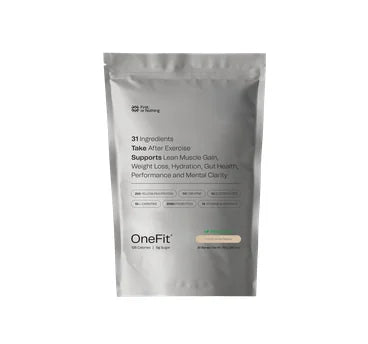
OneFit® is designed for people who want a more streamlined way to support their daily health without building a cupboard full of overlapping formulas. Each serve combines 25g hydrolysed collagen peptides, 5g creatine, hydration electrolytes, probiotics, L-Carnitine, and essential vitamins and minerals, giving you one clearer recovery-focused formula instead of juggling separate tubs for protein, creatine, electrolytes, probiotics, and daily support.
A stronger routine starts with one well-chosen daily formula and fewer random add-ons. Less label overlap. More confidence in what you are actually taking.
The goal is not the biggest stack. The goal is the clearest one.

For Performance
$3.30/day
$297/90 DAYS
The supplement overlap problem is not a failure of motivation. Most people stack products because they are trying to be healthier, not because they are being careless.
But a premium routine should be easier to understand, not harder. If your shelf is full but your plan is vague, the smartest move is to simplify and start with a daily formula that actually earns its place.
OneFit ® gives you a cleaner foundation for everyday support, so your routine feels less like a crowded cupboard and more like a strategy.
Get our weekly deep-dive into performance science, research summaries, and elite training protocols.
Join 45,000+ high-performers. Unsubscribe anytime.
Every batch of First or Nothing products is independently tested for heavy metals, purity, and dosage accuracy to ensure safety and quality.

First or Nothing is independently tested for heavy metals, purity, and dosage accuracy.
 OneFit®
OneFit®
OneFit®
OneFit®
OneFit®
OneFit®
OneFit®
OneFit®
OneFit®
OneFit®
OneFit®
First or Nothing is independently tested for heavy metals, purity, and dosage accuracy.
OneLife™
OneLife™
OneLife™
© 2026 FON Health AU Pty Ltd


Please select your shipping country.
Buy from the country of your choice. Remember that we can only ship your order to addresses location in the chosen country.

 Ships in 24h
"EXCELLENT"
 rated 4.8/5 on


